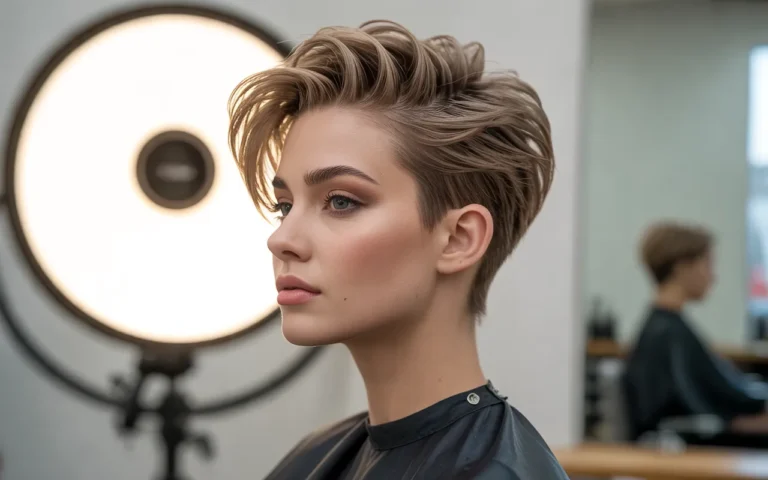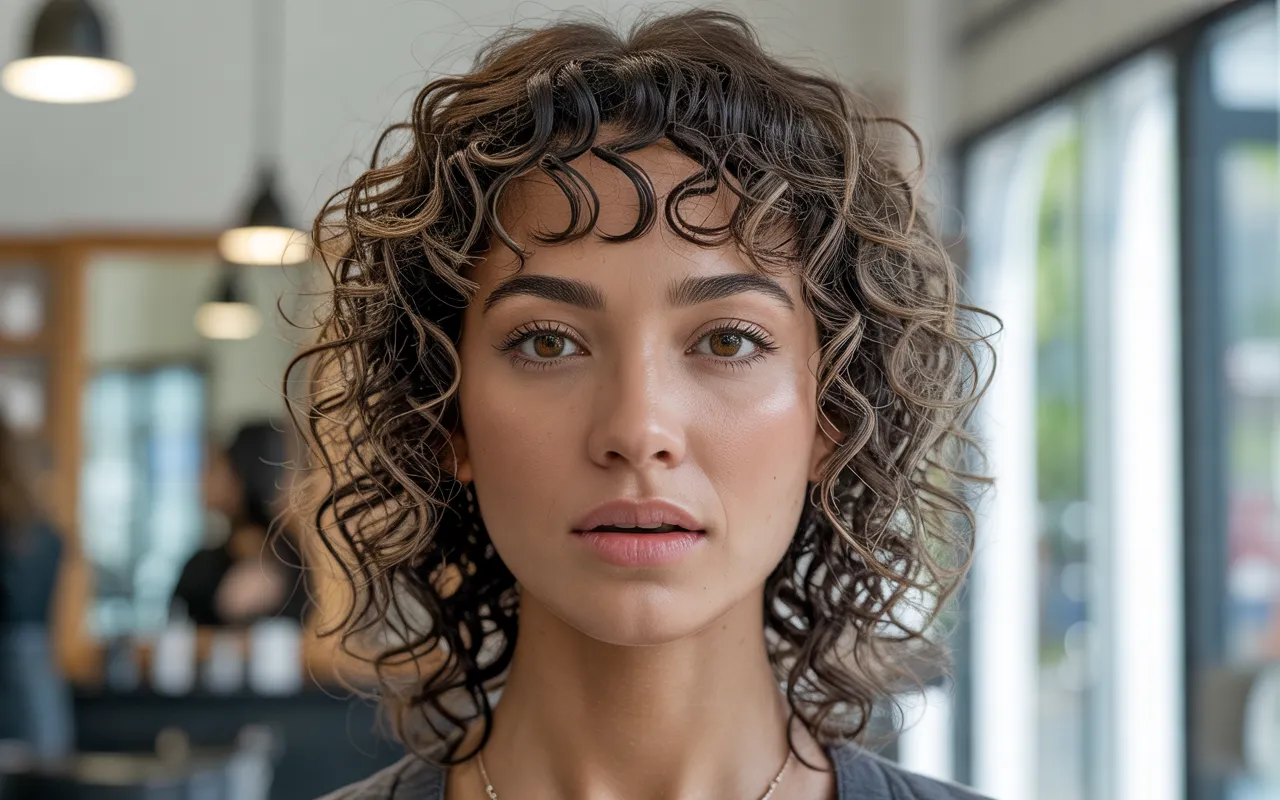
15 Types of Bangs You Should Try for a Fresh Look
A fresh fringe can change your entire look without sacrificing the hair length you love. Sometimes, all it takes is a few face-framing strands to make your haircut feel softer, bolder, or effortlessly chic.
Finding the right types of bangs can feel overwhelming when there are so many beautiful styles to choose from. Should you try wispy French fringe, bold micro bangs, soft curtain pieces, or something that celebrates your natural curls? The best choice depends on your hair texture, face shape, styling habits, and the overall look you want to achieve.
This guide brings together 15 distinctive bang styles that feel fresh, fashionable, and wearable for 2025–2026. You’ll discover ideas ranging from polished salon finishes to relaxed, textured looks, along with practical styling tips to help you choose confidently. Remember, a beautiful fringe should work with your natural hair, not become another daily struggle. Save your favorite inspiration and find the look that feels most like you.
Airy Bottleneck Bangs
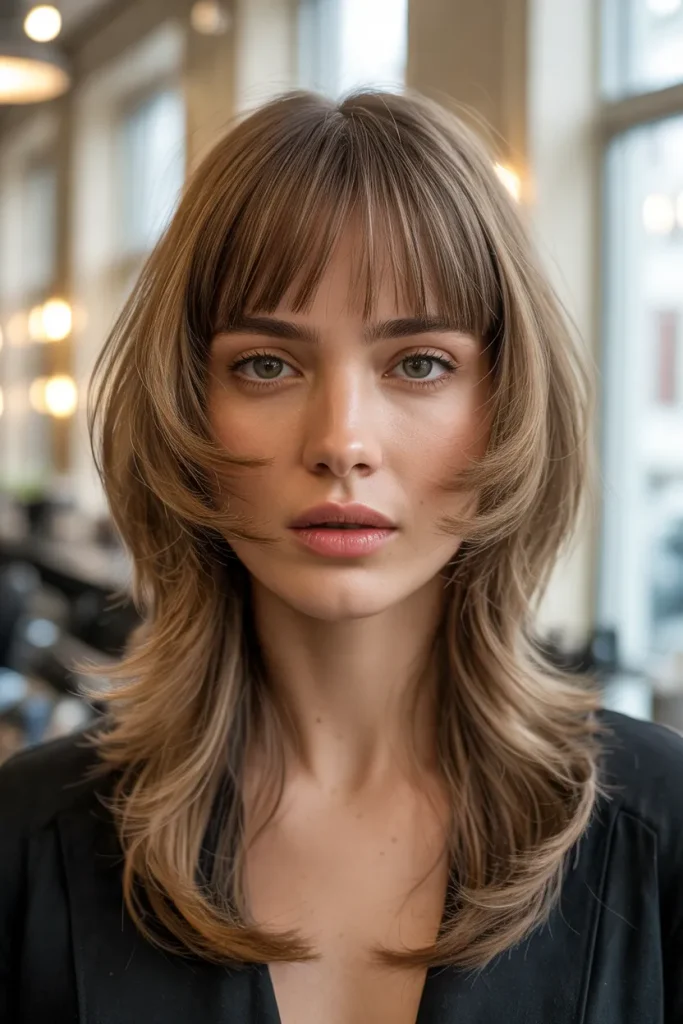
- Creates a soft, sculpted frame around the eyes and cheekbones.
- Combines a narrow center with gradually widening sides.
- Works beautifully with long layers, shoulder-length cuts, and soft waves.
- Adds movement without sacrificing overall hair length.
- Suits straight and gently wavy textures with light styling.
- Needs occasional trimming to maintain its signature shape.
Bottleneck bangs bring a delicate, face-framing transformation without making your haircut feel dramatically shorter. The center sits lightly across the forehead, while longer outer pieces curve toward the cheekbones. This creates a flattering silhouette that looks polished but never overly structured. Among the most wearable types of bangs, this shape bridges the gap between a full fringe and grown-out curtain pieces. It pairs beautifully with loose waves, sleek ponytails, and relaxed blowouts. For everyday styling, use a small round brush to lift the roots, then guide the ends outward for a soft, airy finish.
The secret to getting this look right is keeping the center light enough to separate naturally. Ask your stylist to customize the width according to your forehead and cheekbone placement rather than copying a reference photograph exactly. Fine hair usually benefits from restrained layering, while thicker hair may need subtle internal texturizing to prevent a bulky shape. On busy mornings, a quick blow-dry around the front can refresh the entire haircut without restyling every section. Letting the sides grow slightly longer also makes the transition easier when you eventually want a softer, more open forehead.
Sculpted Micro Fringe
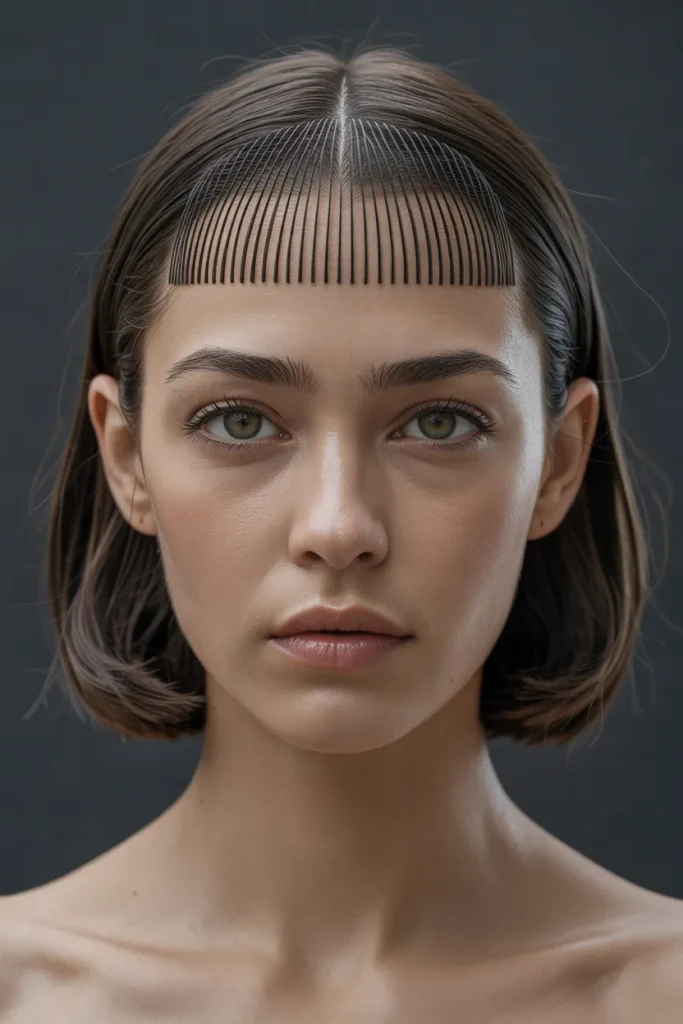
- Delivers a bold, editorial silhouette with minimal visual clutter.
- Highlights eyebrows, eye makeup, and facial expression.
- Looks striking with blunt bobs and sharply tailored pixie cuts.
- Works best when the fringe has a deliberately controlled outline.
- Offers a distinctive alternative to conventional forehead-length bangs.
- Requires regular trims to preserve its short, precise shape.
A sculpted micro fringe changes the entire mood of a haircut in one decisive move. Sitting noticeably above the eyebrows, this compact fringe exposes more of the forehead and brings attention to the eyes. Its clean outline feels fashion-forward, especially when paired with a glossy bob, a sharp pixie, or a minimalist outfit. The effect can be graphic without appearing harsh when the ends have a little natural softness. If you enjoy statement beauty looks, this shorter shape offers plenty of personality. Keep the remaining haircut simple so the fringe becomes the intentional focal point rather than competing with heavy layers.
Before committing, ask your stylist to assess your natural growth pattern and the amount of forehead you want to reveal. A strong cowlick may push the short pieces upward, so the final shape should accommodate your hair rather than fight it. Straight textures make the edge easier to maintain, while wavy hair may need gentle smoothing for a crisp finish. Use a lightweight styling cream sparingly to control stray strands without flattening the roots. Because even small amounts of growth change the proportions, schedule trims according to how precise you want the line to remain between salon visits.
Wispy French Fringe
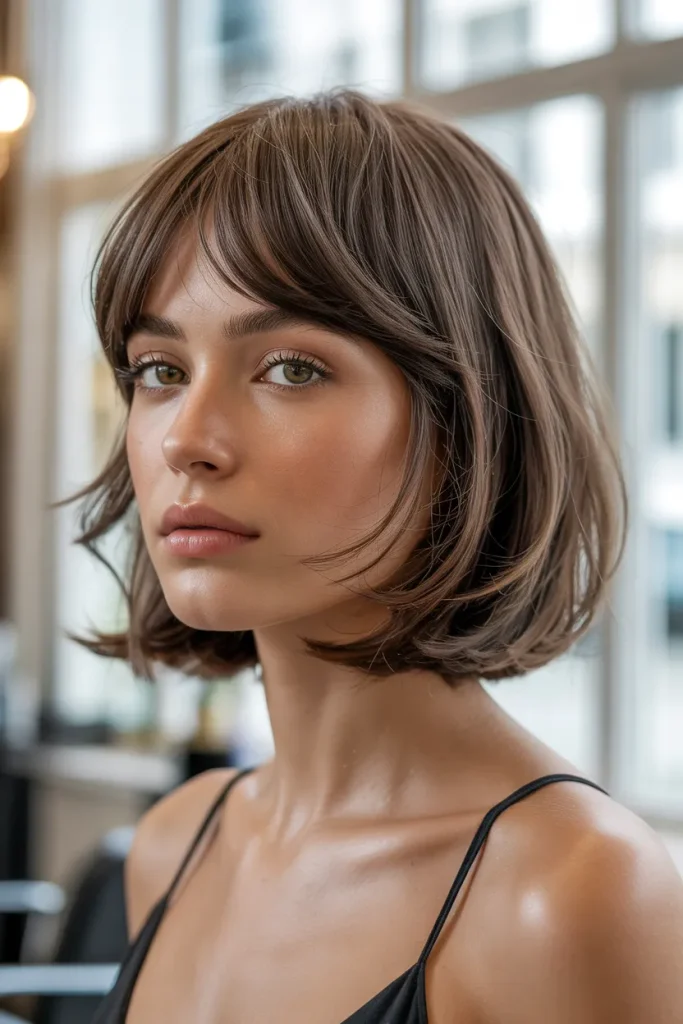
- Creates a relaxed, romantic finish without a dense forehead covering.
- Keeps the eyebrows partially visible through delicate separation.
- Complements French bobs, textured lobs, and natural air-dried waves.
- Makes fine hair appear softly detailed rather than heavily layered.
- Transitions gracefully into longer fringe as the hair grows.
- Looks especially charming with minimal makeup and simple accessories.
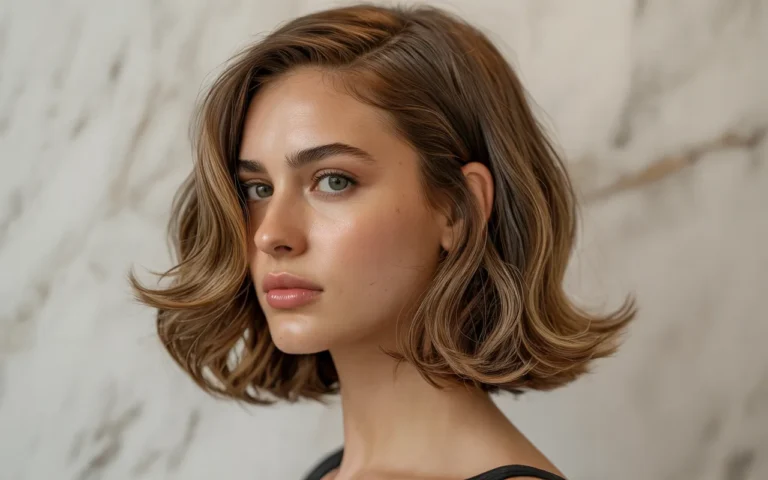
Wispy French fringe gives a classic bob a softer, more lived-in personality. Instead of forming a solid curtain, the fine strands leave little spaces across the forehead, allowing the eyebrows and skin to remain visible. The result feels understated, romantic, and effortlessly chic. It works particularly well with a chin-length bob, but longer hair can carry the same Parisian mood through subtle texture around the face. For a natural finish, dry the fringe forward with your fingers before gently separating the ends. The goal is movement and lightness, not a perfectly uniform line across the forehead.
The right density makes all the difference with this delicate shape. Ask your stylist to begin conservatively, because removing too much hair can leave the fringe looking sparse instead of intentionally airy. Straight hair usually falls into place easily, while waves may create an attractive irregular finish that needs little correction. A tiny amount of lightweight cream can define individual pieces, but avoid oily products near the roots. On humid days, carry a small comb to restore the separation after wearing a hat or spending time outdoors. The fringe also pairs nicely with tucked ears and understated gold earrings.
Curved Halo Bangs
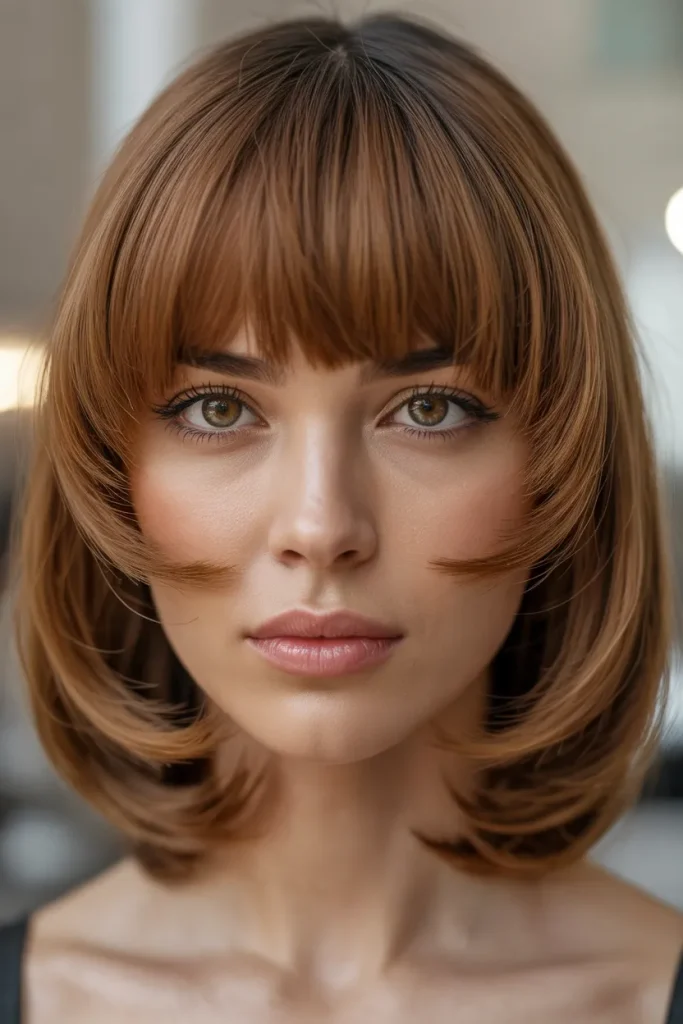
- Creates a rounded frame that emphasizes the eyes and upper cheeks.
- Gives straight hair a smooth, intentional silhouette.
- Blends elegantly into rounded bobs and softly graduated cuts.
- Offers a polished alternative to sharply blunt fringe.
- Can soften angular features without hiding the whole forehead.
- Benefits from careful blow drying to preserve its curved outline.
Curved halo bangs create a graceful arc that makes the front of a haircut feel beautifully connected. The middle follows the forehead, while the sides descend toward the temples instead of ending abruptly. This rounded shape can make a simple bob look more considered and gives longer hair a refined, almost sculptural finish. It is especially appealing when the rest of the haircut has smooth movement rather than choppy texture. Use a medium round brush to guide the fringe inward, then release it before the ends become overly curled. The finished effect should look softly shaped, not stiff or excessively perfect.
For a balanced result, your stylist should consider how the fringe connects with the cheekbone area and the overall haircut length. A heavier version can provide stronger definition, while a lighter version feels delicate and casual. Naturally straight hair generally maintains the curve with less effort, although a quick root lift can help prevent flatness. If your hair tends to split at the center, drying the fringe from side to side while damp may encourage a more continuous arc. Keep the ends healthy and avoid excessive heat, since dry, brittle strands can make a smooth curved edge appear uneven.
Choppy Pixie Bangs
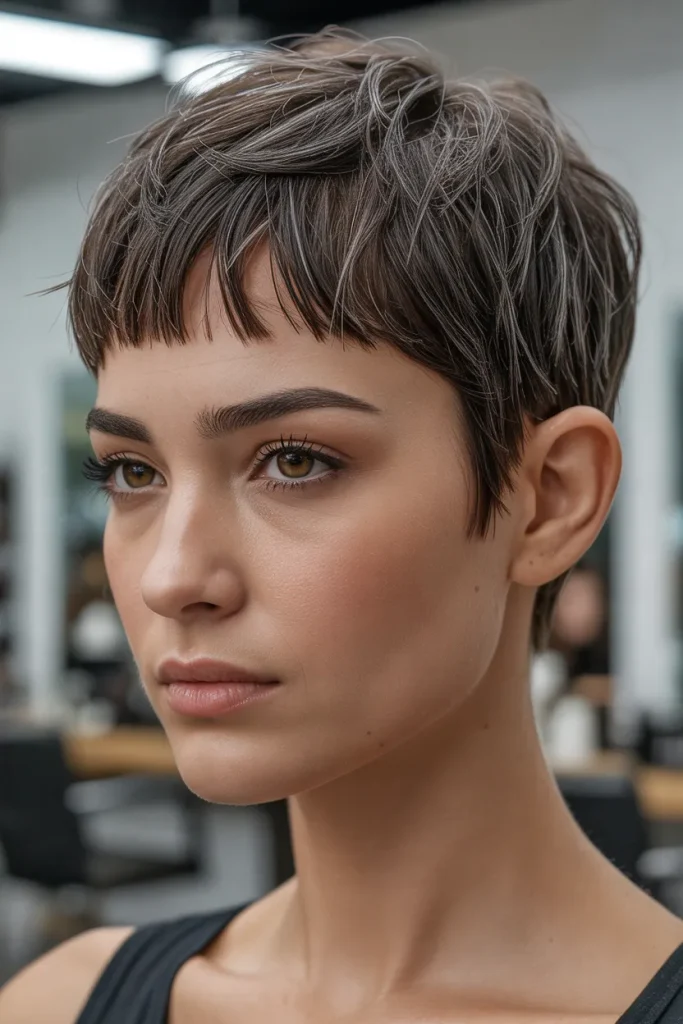
- Adds movement and attitude to a short haircut.
- Creates visual texture without requiring long layers.
- Works well with cropped sides and a softly textured crown.
- Lets individual pieces create an intentionally imperfect finish.
- Suits straight hair and manageable loose waves.
- Needs shaping appointments to keep the cropped outline balanced.
Choppy pixie bangs make a short haircut feel energetic, modern, and deliberately undone. Their irregular lengths break up the forehead line, giving the face a more dynamic frame than a uniform fringe would provide. Paired with tapered sides and a lightly textured crown, the result feels fresh without demanding elaborate styling. A small dab of matte paste can separate the ends and bring out the haircut’s piecey character. Apply product sparingly, warming it between your fingertips before touching the hair. This technique helps preserve movement instead of creating stiff spikes that overpower the softer details around the eyes.
The most flattering version depends on the balance between the fringe and the rest of the crop. Ask for enough length to create separation, especially if your hair is very fine or naturally lies flat. Thick hair may benefit from selective internal texturizing so the front does not feel crowded. For everyday wear, rough dry the roots in several directions and finish by arranging a few pieces with your fingers. This shape is convenient for active mornings because it needs little equipment, but it is not completely maintenance free. Regular salon shaping keeps the sides and fringe working together as they grow.
Long Curtain Sweep
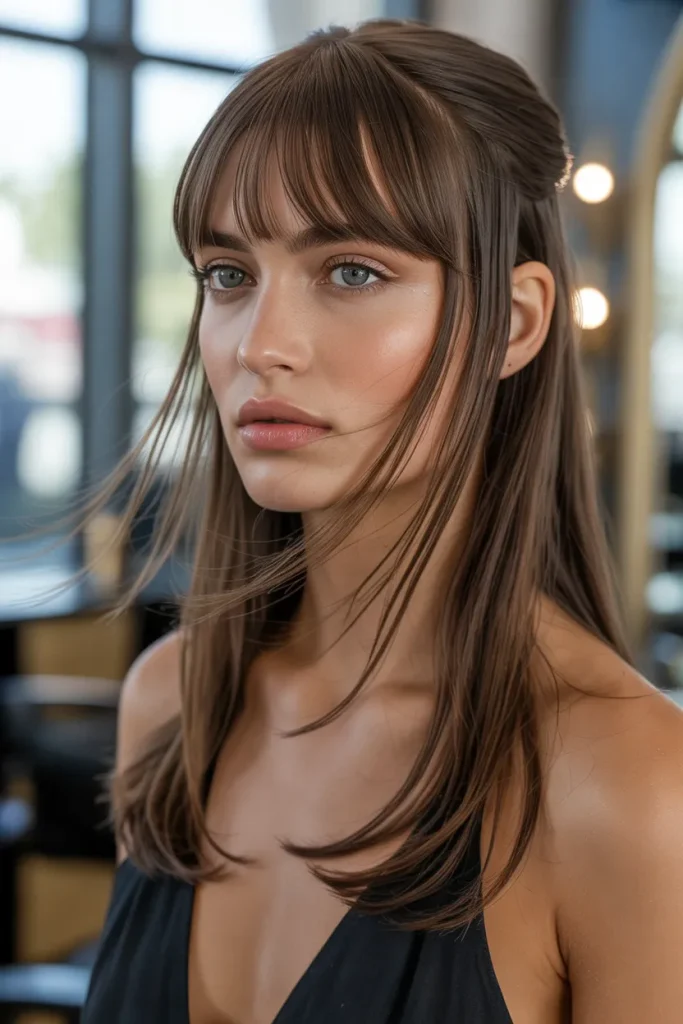
- Opens the face while retaining generous length around the cheeks.
- Creates natural movement when hair is worn loose or tied back.
- Pairs beautifully with long layers and softly brushed waves.
- Allows flexible parting for different everyday looks.
- Offers an easier growing out phase than a short fringe.
- Benefits from a round brush or large rollers for lift.
Long curtain sweep bangs offer the elegance of a face frame without placing a heavy line across the forehead. The center part opens naturally, while the extended front pieces sweep along the cheekbones and merge into the rest of the haircut. This shape looks especially beautiful on long hair because it creates movement around the face even when the lengths remain straight. It also gives a ponytail or low bun a softer finish, with a few pieces left loose at the front. For a salon style result, lift the roots with a round brush and direct each side away from the face.
The most important detail is the transition between the shorter center and the longer sides. Ask for a gradual connection so the front does not look disconnected from your layers. If your hair is fine, keep the perimeter relatively full; too much layering can make the ends appear thin. Thick hair can support a more dramatic sweep, especially when the front sections are carefully shaped. On mornings when you have little time, dampen only the fringe and restyle it instead of washing everything. These versatile bangs can also be tucked behind the ears when you want a cleaner, more minimal appearance.
Textured Baby Bangs
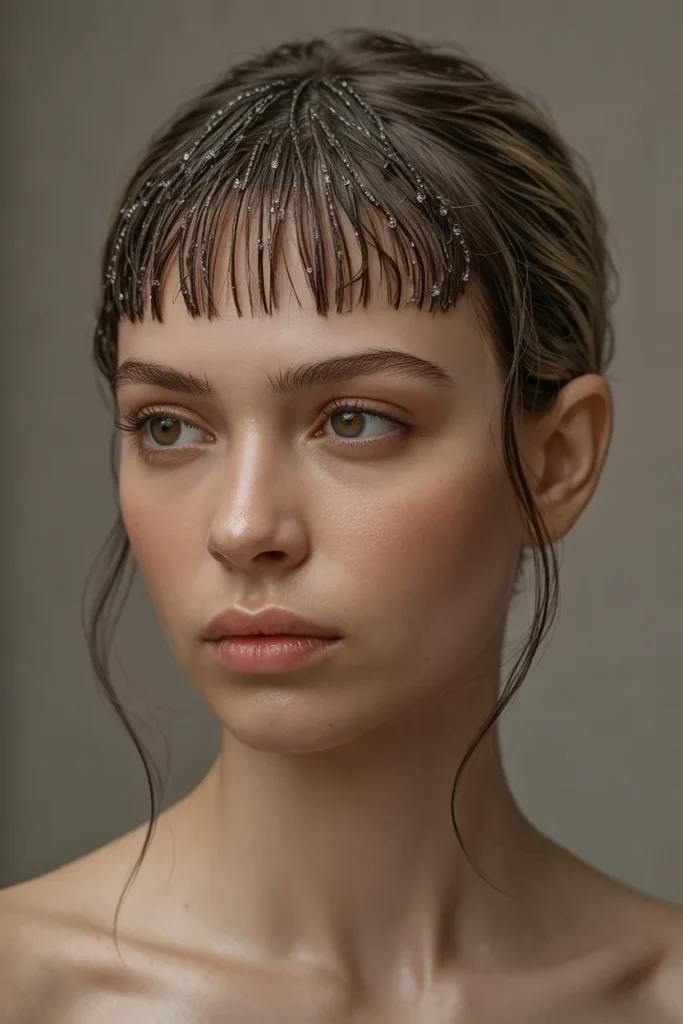
- Creates a playful, high fashion focal point.
- Leaves the eyebrows fully visible and defines the upper face.
- Adds contrast to longer hair and softly layered bobs.
- Looks intentional with a lightly irregular edge.
- Works well for people who enjoy distinctive beauty styling.
- Requires frequent shaping because small growth changes the proportions.
Textured baby bangs bring a playful editorial edge to hair that might otherwise feel familiar. The short fringe sits high on the forehead, but tiny variations in length keep it from looking like a rigid, straight strip. This combination of compact shape and visible texture can make long hair, a sleek bob, or a cropped cut feel more fashion focused. The open forehead also brings attention to brows, eyes, and accessories near the face. For styling, use a small brush to guide the fringe into place, then separate a few ends with your fingertips. A natural finish looks more modern than excessive shine.
Because the fringe is short, proportion matters more than it does with longer front pieces. Your stylist can adjust the width and irregularity to suit your preferred look, from delicate and subtle to bold and graphic. Fine hair often creates separation easily, while dense hair may require careful removal of internal weight. Avoid cutting the fringe yourself unless you are experienced with short shapes, since small mistakes can become very noticeable. A lightweight styling lotion may control flyaways without making the pieces stick together. Plan regular maintenance, and remember that growing this fringe out can take patience as it passes through several lengths.
Side Flick Fringe
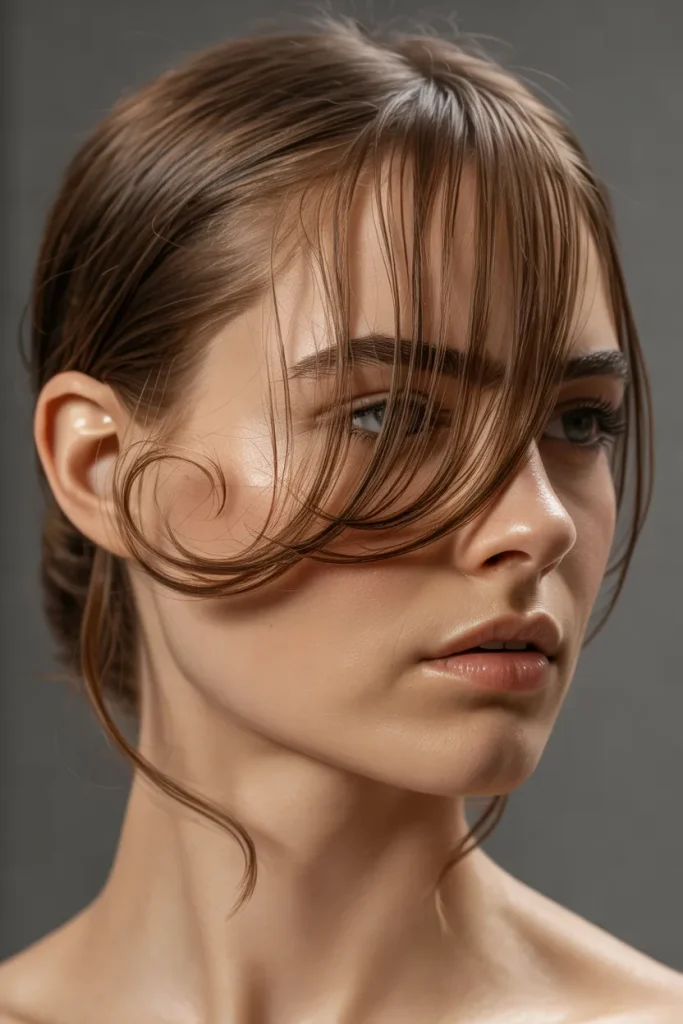
- Creates diagonal movement that breaks up a symmetrical haircut.
- Works beautifully with side parts and softly layered lengths.
- Gives straight hair an elegant, polished direction.
- Can be restyled quickly for work, dinners, or events.
- Offers a useful option for people hesitant about a full fringe.
- Needs root direction training to keep the sweep in place.
A side flick fringe brings instant direction and polish to a haircut through one sweeping line. The longer front section travels across the forehead and curves toward a temple, creating movement without covering both eyes. It can make a classic lob look more dynamic or give long, smooth hair a subtle red carpet finish. The style is especially useful when you want a visible change but prefer to keep most of your forehead open. Start with damp roots and a paddle brush, directing the hair toward your chosen side. A brief cool air finish helps the sweep settle with a softer, natural curve.
Your natural part will influence how easily this fringe falls into place. If your hair usually separates on the opposite side, ask your stylist to work with its growth direction instead of forcing an uncomfortable arrangement. Medium density often gives the sweep enough body, while very fine hair may need a small amount of root lift. A flexible hold spray can help during windy commutes without making the front feel crunchy. The longer shape also offers styling flexibility: pin it back, blend it into a ponytail, or switch the part for a different mood. Occasional shaping keeps the ends from obscuring your eyes.
Feathered Butterfly Fringe
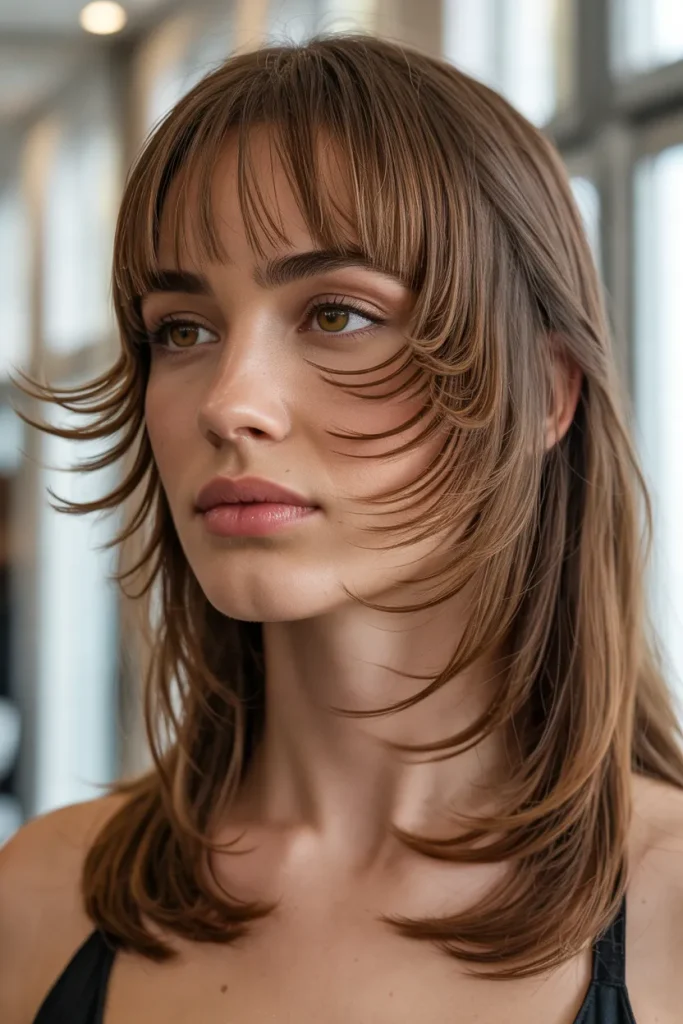
- Adds visible lift around the forehead and cheekbones.
- Connects naturally with long, cascading layers.
- Creates a soft, bouncy silhouette when blow dried.
- Gives medium and thick hair a lighter front appearance.
- Looks attractive with large waves or a smooth blowout.
- Requires careful layering to avoid thin, wispy ends.
Feathered butterfly fringe gives long hair a lifted shape without sacrificing the drama of its length. Shorter front pieces open around the forehead, then flow into longer layers that flick outward near the cheekbones. This creates a cascading silhouette that feels glamorous but remains wearable for everyday routines. The movement is most visible after a round brush blowout, although naturally wavy hair can produce a softer version with less effort. Rather than curling every section separately, concentrate on the front and crown to create lift. The result frames the face beautifully while allowing the back lengths to remain full and flowing.
A good consultation should focus on how the shorter pieces connect to the rest of your haircut. If the transition is too abrupt, the fringe can appear separate from the longer layers. Thick hair usually holds the feathered shape well, while fine hair may need restrained layering to preserve fullness at the ends. A large round brush or oversized rollers can encourage the outward bend without making the hair look tightly curled. For quicker styling, refresh only the front sections and let the remaining lengths keep their natural texture. Trim the framing pieces when they begin to lose their shape or fall awkwardly across the eyes.
Rounded Shag Fringe
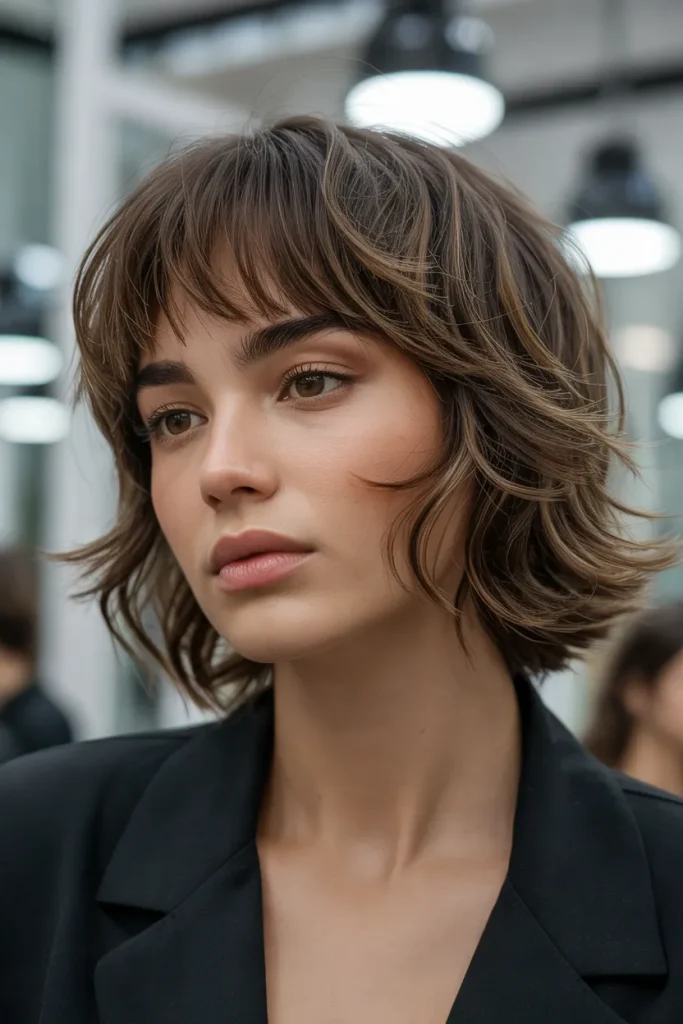
- Creates a cohesive, textured frame across the upper face.
- Blends naturally into a shag haircut with visible layers.
- Gives loose waves a relaxed, rock inspired silhouette.
- Adds body without relying on perfectly curled ends.
- Works particularly well with medium density hair.
- Needs occasional reshaping to keep the rounded outline balanced.
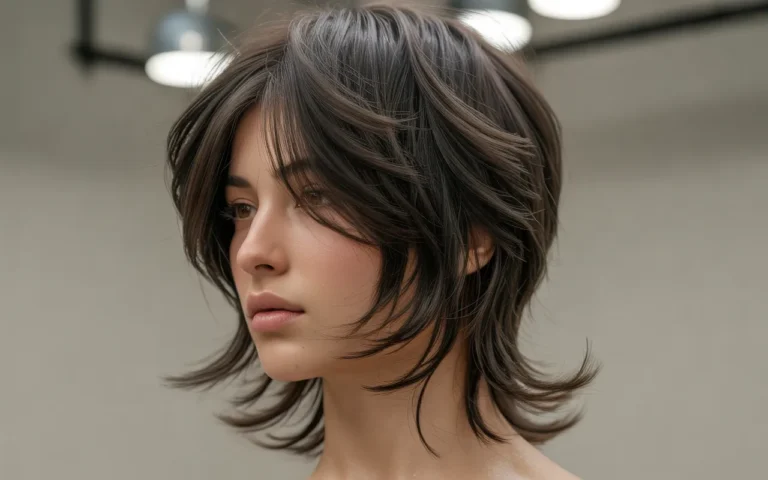
Rounded shag fringe gives a layered haircut a cool, slightly rebellious character without losing softness. The fringe follows a curved line across the forehead, then dissolves into uneven pieces around the temples and cheekbones. That connection makes the whole shag look intentional, rather than like separate layers placed around the face. Natural waves bring out the texture, while straight hair can show off the cut’s graphic shape. For styling, scrunch a small amount of lightweight mousse through damp lengths and let the hair dry with minimal disturbance. The finished silhouette should feel touchable, with movement at the crown and an easy, imperfect edge.
This shape works best when your stylist considers the natural texture before deciding how short to cut the front. Wavy hair may spring upward as it dries, so leaving enough length initially can prevent an unexpectedly short fringe. Straight hair may need gentle styling to reveal the layered shape, while thick hair can benefit from selective weight removal. Avoid brushing the finished shag repeatedly, since that can flatten the texture and create unwanted volume. Instead, reshape individual pieces with your fingers. A little dry texture spray can revive the crown between washes, and regular trims keep the rounded fringe connected to the surrounding layers.
Sleek Glass Fringe
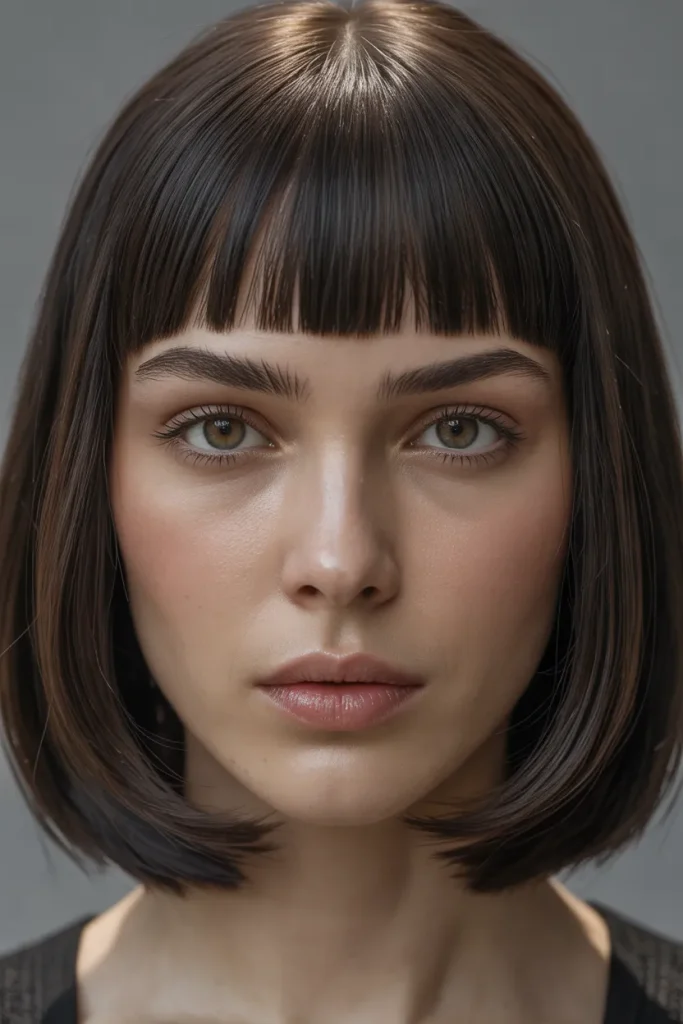
- Creates a smooth, reflective finish with strong visual definition.
- Pairs beautifully with blunt bobs and sleek shoulder length cuts.
- Draws attention to the eyes through a clean horizontal line.
- Works especially well when hair naturally lies straight.
- Makes simple outfits feel more intentional and polished.
- Needs heat protection and precise trimming to preserve the edge.
A sleek glass fringe makes a haircut look polished through shine, precision, and a clean line. The eyebrow grazing length sits evenly across the forehead, complementing a blunt bob or smooth shoulder length style. Its appeal comes from the contrast between the crisp fringe and the reflective finish of the hair. This is a striking option for minimalist wardrobes, evening outfits, or occasions when you want a refined appearance without elaborate curls. To style it, apply heat protectant and guide the fringe downward with a small brush. Finish with a cool setting to encourage a smooth surface without pressing the hair flat.
The finish depends on the condition and direction of the hair, not simply on the products used. If your strands naturally wave or separate, a careful blow dry may be needed each morning to restore the straight edge. Ask your stylist to account for your natural fall and avoid cutting the fringe too short while it is wet. Fine hair can look particularly sleek, while thick hair may need subtle internal shaping to reduce bulk. Use a lightweight serum only on the ends, since heavy oils can make the roots appear greasy. A regular trim helps preserve the precise line as new growth appears.
Piecey Birkin Bangs
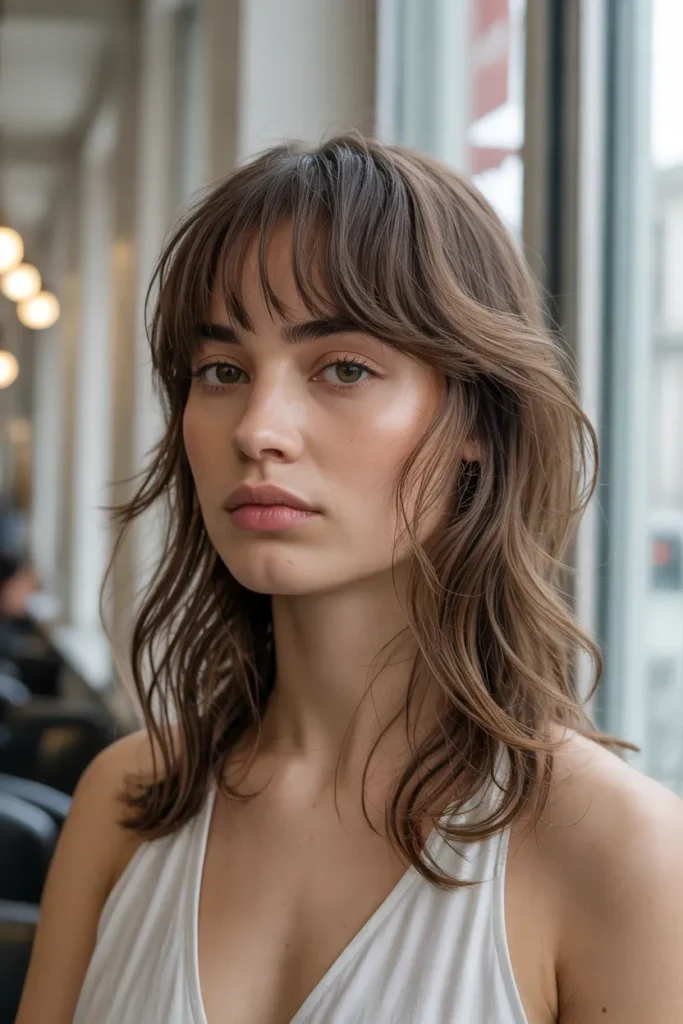
- Creates a relaxed vintage mood with modern softness.
- Leaves small spaces that prevent the fringe looking too dense.
- Works with long waves, layered lobs, and softly tousled bobs.
- Frames the eyes while maintaining some forehead visibility.
- Suits people who prefer an imperfect, lived in finish.
- Benefits from light styling rather than heavy smoothing products.
Piecey Birkin bangs bring a relaxed vintage feeling to modern hair, balancing a soft fringe with naturally separated strands. The length usually grazes the eyebrows, while the corners extend slightly farther to connect with the sides. Small gaps make the fringe feel light instead of forming a solid block across the forehead. This shape looks especially appealing with loose waves, a simple lob, or long layers that move around the shoulders. For everyday styling, dry the fringe forward and separate a few pieces with your fingers. The result should feel softly undone, as though the hair has settled naturally rather than been carefully sculpted.
The key is creating enough density to frame the eyes while preserving the spaces between individual strands. Ask your stylist to refine the ends carefully instead of thinning the entire fringe too aggressively. Fine hair may need a slightly fuller section to prevent the pieces looking too sparse, while thick hair can carry more visible separation. A lightweight cream can define the ends, but a flexible finish usually looks better than a stiff hold. If the fringe loses its shape during the day, dampen the roots lightly and brush them back into position. This style grows out gracefully when the sides remain connected to longer layers.
Asymmetric Veil Bangs
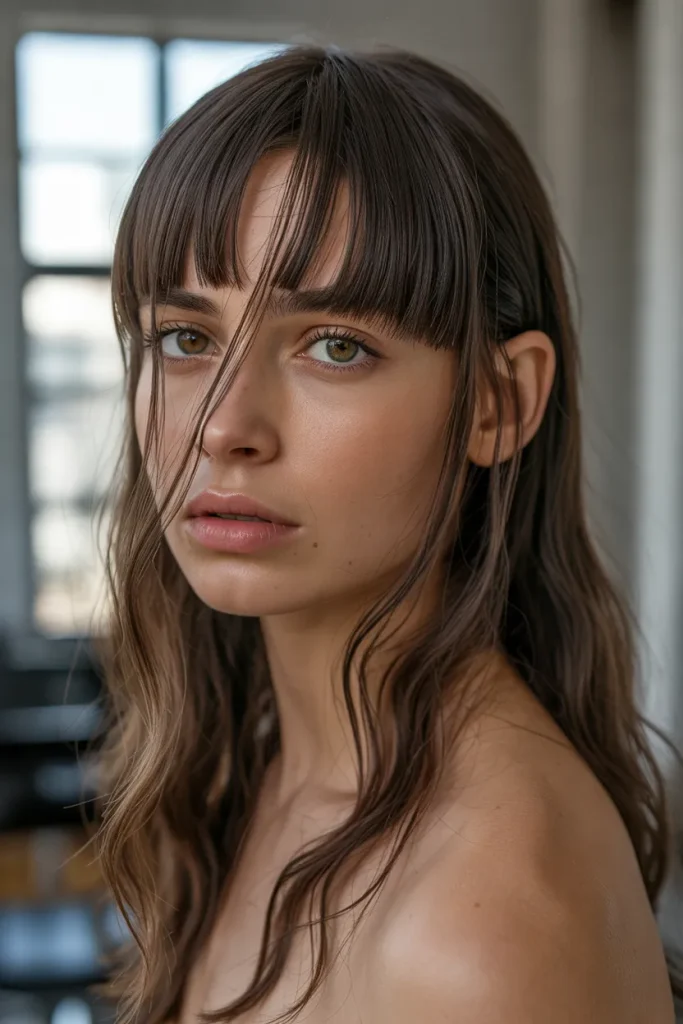
- Creates an asymmetrical silhouette with contemporary editorial appeal.
- Adds direction to sleek, straight hair and softly layered cuts.
- Offers partial forehead coverage without a heavy fringe.
- Works well with an off center part.
- Makes simple earrings and clean makeup feel more prominent.
- Requires shaping that respects the natural direction of growth.
Asymmetric veil bangs bring an artistic angle to the face by letting one side fall longer than the other. The diagonal line creates visual movement and gives a sleek haircut a more distinctive silhouette. Unlike a traditional side sweep, this fringe feels deliberately sculpted, with one section draping across the forehead while the opposite side remains more open. It pairs especially well with a smooth bob, a long straight cut, or an understated tucked behind the ear finish. For styling, direct the front section diagonally while drying, then loosen the ends with your fingers so the shape stays fluid.
This fringe needs thoughtful customization because the difference in length is central to its appeal. Ask your stylist to check how the hair falls when you wear your preferred part, both wet and dry. Naturally straight hair usually shows the diagonal shape clearly, while waves can soften it into a more relaxed veil. If the longer side tends to slip into your eyes, a discreet pin or light flexible spray can keep it comfortable. Avoid adding too many competing layers around the face, since a cleaner outline lets the asymmetry stand out. Regular shaping maintains the balance without requiring a complete haircut refresh.
Curly Crescent Fringe
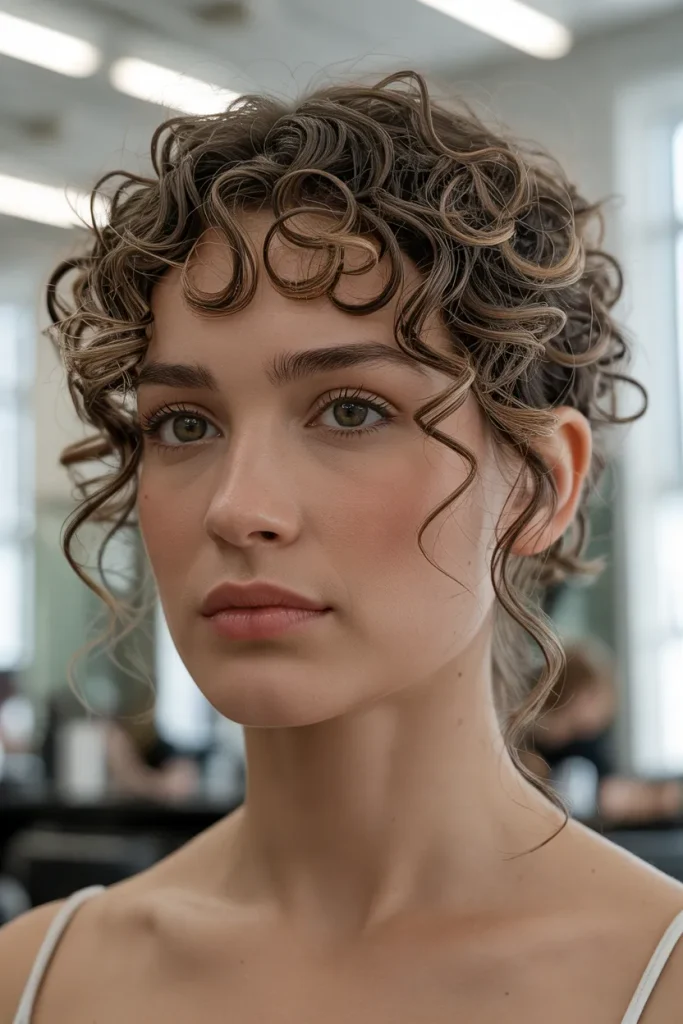
- Celebrates natural curl definition rather than forcing curls straight.
- Creates a curved frame that blends into surrounding ringlets.
- Works with curly bobs, shoulder length cuts, and longer textured hair.
- Adds personality while preserving natural volume.
- Benefits from curl specific hydration and gentle handling.
- Needs dry shaping to account for natural curl shrinkage.
Curly crescent fringe makes natural curls part of the haircut’s design instead of treating them as a styling problem. The curls form a gentle arc across the forehead, with the outer pieces blending into the temples and surrounding layers. This shape gives a curly bob or longer textured cut a defined focal point while keeping the overall silhouette soft. The best result comes from respecting the way each curl contracts as it dries. Apply a small amount of curl cream to damp fringe, arrange the curls gently, and allow them to dry without repeated touching. The finished curve should look springy, balanced, and naturally expressive.
A stylist experienced with curls can help determine the right length by assessing the hair in its natural state. Cutting the fringe too long while wet may leave it much shorter after drying, so dry shaping is often useful. Dense curls may need careful distribution across the forehead, while looser curls can benefit from a slightly fuller outline. Keep the routine simple with a gentle cleanser, conditioner, and a styling product suited to your texture. On refresh days, mist the fringe lightly with water and reshape individual curls instead of brushing them out. Regular trims preserve the curve as the curls grow.
Braided Fringe Detail
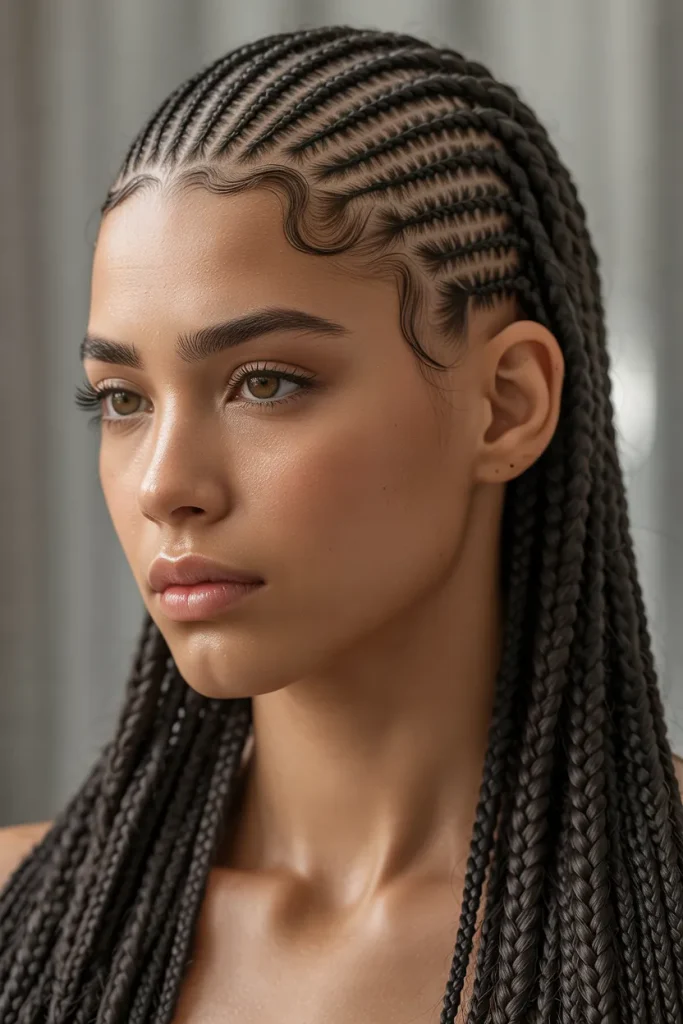
- Creates a distinctive hairline detail without cutting natural fringe.
- Works beautifully with long braids, twists, and protective styles.
- Keeps front strands organized during busy days and events.
- Offers opportunities for subtle beads or discreet accessories.
- Can suit different braid sizes and hair lengths.
- Requires gentle tension around the hairline and regular scalp care.
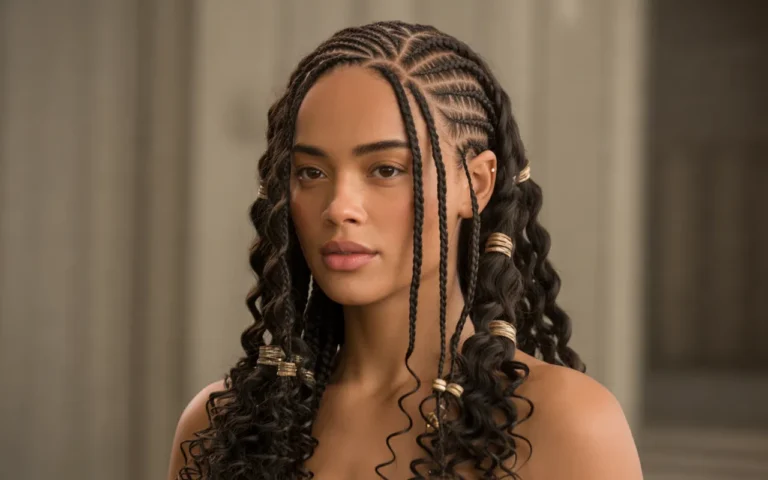
A braided fringe detail offers a creative way to frame the forehead without cutting the hair. Small, carefully placed braids follow the front hairline and connect with longer braids, twists, or a textured protective style. The result feels intricate and intentional, especially when the braid pattern is clean and the remaining lengths fall neatly around the shoulders. It can be subtle enough for everyday wear or styled with understated accessories for celebrations. Ask your braider to map the front sections before starting, so the design follows your hairline naturally. A satin scarf at night can help reduce friction and keep the detail looking tidy.
Comfort should guide the design as much as appearance. Braids that feel painfully tight or pull at the edges need adjustment rather than being tolerated for the sake of longevity. Choose a braid size and pattern that suit your hair density, and keep the scalp clean with a routine compatible with your style. Lightweight products can help manage dryness without leaving buildup around the roots. If you add beads or other accessories, keep them secure and avoid excessive weight on the smallest braids. This detail is particularly versatile because it can be adapted to different protective styles while preserving the natural hairline.
Conclusion
The right bangs can refresh your haircut, highlight your favorite features, and give familiar hairstyles a completely new personality. From delicate, wispy pieces to sculpted micro fringes and natural curly shapes, these 15 ideas offer inspiration for different textures, lengths, and personal styles.
When choosing between the many types of bangs, think about your everyday routine as much as the finished look. Consider how much time you want to spend styling, how your hair naturally falls, and how often you’re comfortable visiting the salon for trims. Even a small change around your face can feel exciting when it suits your lifestyle.
Save this article on Pinterest for your next salon appointment, try the style that catches your eye, and share these ideas with someone ready for a fresh look. Your next favorite hairstyle might be just a fringe away!