15 Ways How to Make Your Braids Last Longer Easily
Beautiful braids deserve to look fresh long after you leave the salon. But what happens when frizz, loose roots, and messy ends start ruining your favorite protective hairstyle?
Learning how to make your braids last longer doesn’t require an expensive collection of products or complicated daily routines. Small changes in how you protect, cleanse, moisturize, and style your braids can make a noticeable difference. Whether you love knotless box braids, Fulani braids, cornrows, or beautiful bohemian styles, proper maintenance helps preserve their original shape and polished finish. I’ve noticed that nighttime protection and gentle handling are two habits that make everyday braid care much easier. In this guide, you’ll discover 15 beautiful braided hairstyles alongside practical ways to keep them looking neat, stylish, and well-maintained. Get ready to find your next favorite look and make your braids last beautifully!
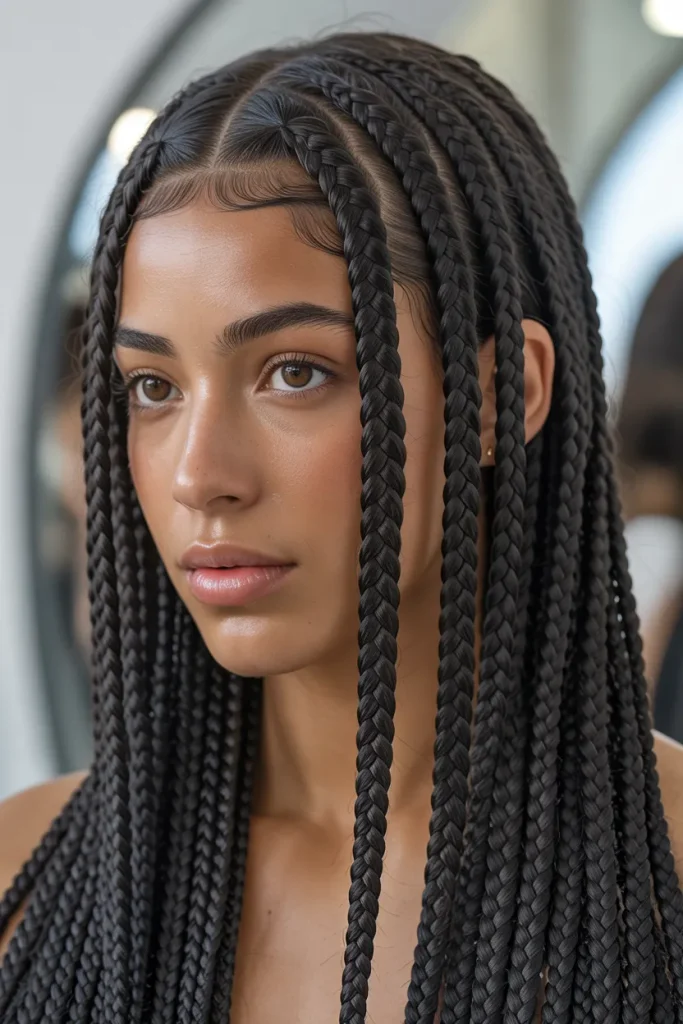
Sleek Knotless Box Braids
- Choose medium-sized sections for balanced tension and easier maintenance.
- Keep the roots neat without pulling excessively on your scalp.
- Apply lightweight mousse to control frizz along the braid surface.
- Wrap your hair with a satin scarf before sleeping.
- Refresh visible partings with a small amount of styling gel.
- Avoid repeatedly touching or separating freshly installed braids.
Sleek knotless box braids are a beautiful choice when you want a polished protective hairstyle that stays attractive beyond the first few days. Their gradual, natural-looking installation creates a smooth transition from your scalp into each braid. Medium sections offer a particularly practical balance because they are substantial enough to resist everyday friction without feeling unnecessarily heavy. Keeping the roots tidy is essential for maintaining their appearance. Ask your stylist to create clean, consistent partings and avoid excessive tension during installation. A comfortable foundation helps prevent premature looseness and makes your finished braids easier to manage throughout their wear.
Daily maintenance makes a noticeable difference when preserving this clean braided finish. In my experience, nighttime protection is one of the simplest habits to maintain because it reduces rubbing against cotton pillowcases. Cover your hair with a satin bonnet or scarf, making sure the ends are protected too. During the week, use a lightweight braid mousse to smooth developing flyaways without soaking the style. Avoid applying heavy oils directly to your scalp, as excessive product can attract buildup. If your roots become slightly fuzzy, carefully smooth them with your fingertips instead of repeatedly brushing or manipulating the finished braids.
Defined Stitch Cornrows
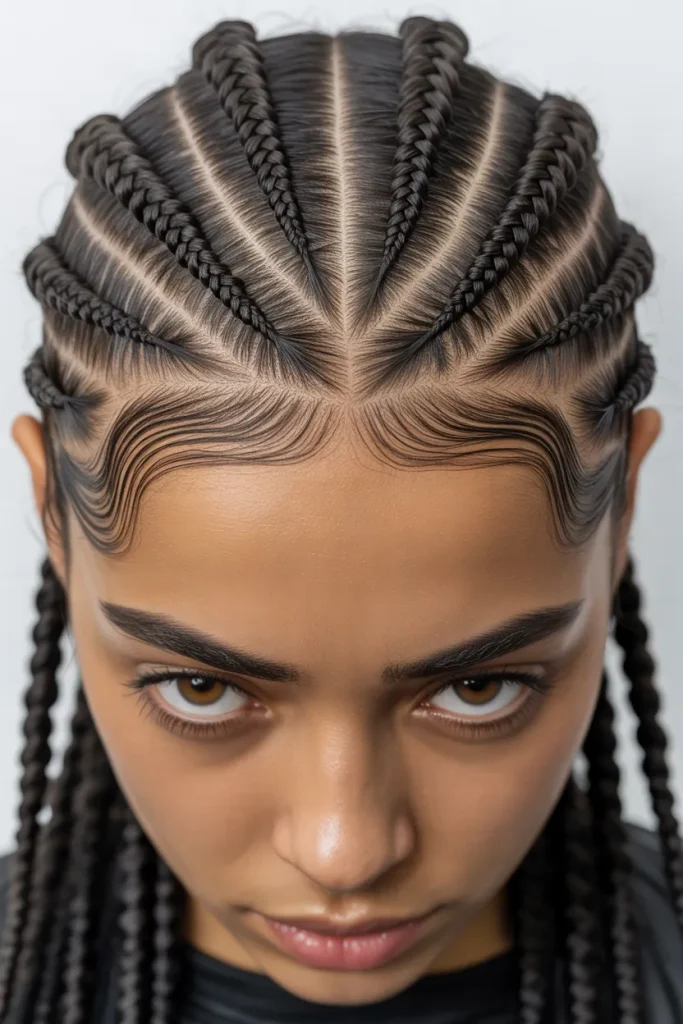
- Request consistent section sizes for a uniform appearance.
- Use a lightweight setting product to maintain crisp braid definition.
- Protect the cornrows with a satin-lined covering overnight.
- Avoid excessive scratching that can disturb the exposed parts.
- Choose a refreshing scalp spray instead of heavy creams.
- Schedule removal before significant root growth compromises neatness.
Defined stitch cornrows bring an architectural finish to protective styling, making even a simple braided pattern look intentional and fashionable. Their distinctive raised sections create visible definition between each row, giving the hairstyle a fresh salon appearance. The secret to keeping this structure attractive is starting with properly prepared hair and carefully controlled installation. Ask your stylist to use consistent partings and maintain comfortable tension throughout the design. Smaller stitches can create sharper detailing, while slightly wider rows offer a softer appearance. Choosing a pattern that follows your natural hairline also helps the finished style complement your facial features beautifully.
Because stitch cornrows sit close to the scalp, everyday care should focus on cleanliness, comfort, and reducing unnecessary friction. Apply a suitable lightweight scalp moisturizer when dryness develops, rather than coating the entire hairstyle with thick products. If you exercise frequently, allow sweat to dry and gently cleanse your scalp when necessary. A satin scarf helps preserve the raised details while sleeping. Avoid repeatedly pulling the rows into tight ponytails, since constant tension can affect their appearance and comfort. When new growth becomes noticeable, consider a professional refresh or removal instead of forcing the original pattern to remain perfectly flat.
Bohemian Knotless Braids
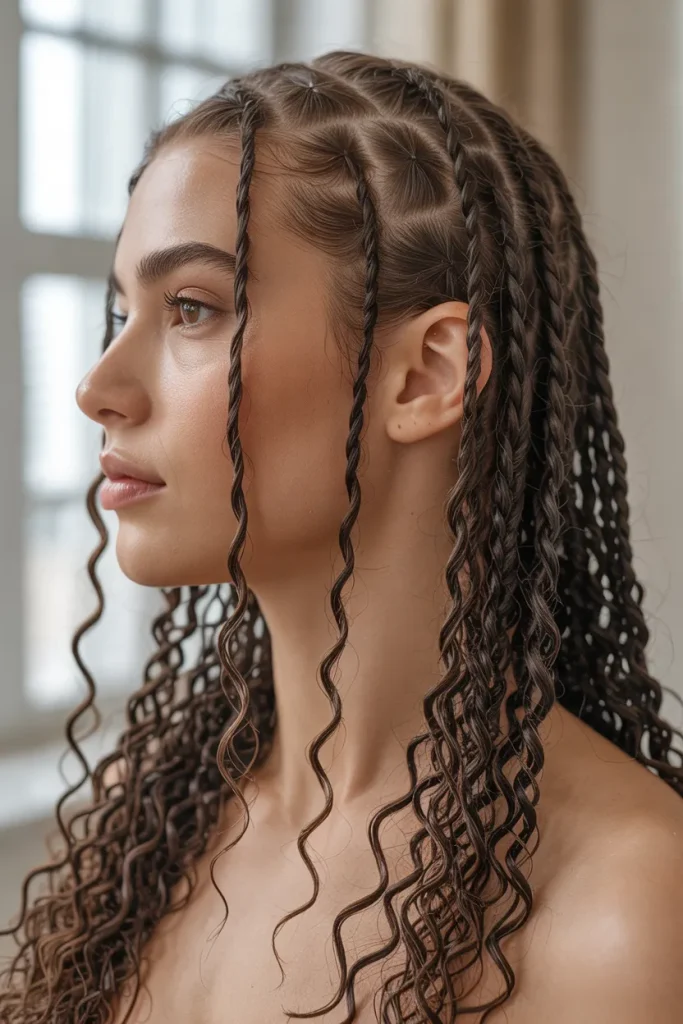
- Select durable braid extensions with curls that blend naturally.
- Keep loose curly pieces detangled using your fingers.
- Apply a small amount of curl mousse to maintain definition.
- Separate tangled curls gently instead of pulling them apart.
- Protect the curly sections inside a loose satin bonnet.
- Refresh individual curls rather than repeatedly wetting the hairstyle.
Bohemian knotless braids combine structured plaits with loose curls, creating a romantic finish that feels relaxed yet luxurious. The contrast between neat braided sections and flowing tendrils gives the hairstyle beautiful dimension from every angle. However, the loose pieces require slightly different care from traditional box braids. Ask your stylist to distribute the curls thoughtfully so they frame your face without creating excessive bulk. Choose extension hair that blends naturally with your braided texture. The right curl pattern can make the entire installation look more cohesive while giving you a versatile hairstyle for everyday outfits, holidays, and special occasions.
The biggest challenge with this design is keeping the loose curls from becoming tangled or losing their original shape. Rather than brushing them aggressively, separate small sections gently using your fingers. A lightweight curl mousse can help restore definition without leaving the hair stiff or sticky. At bedtime, gather the braids loosely and tuck the curly ends into a satin bonnet. Avoid allowing the curls to rub against clothing throughout the day, especially when wearing textured sweaters. If individual pieces become severely tangled or damaged, have your stylist assess them instead of repeatedly trimming or pulling at the extensions.
French Curl Braids
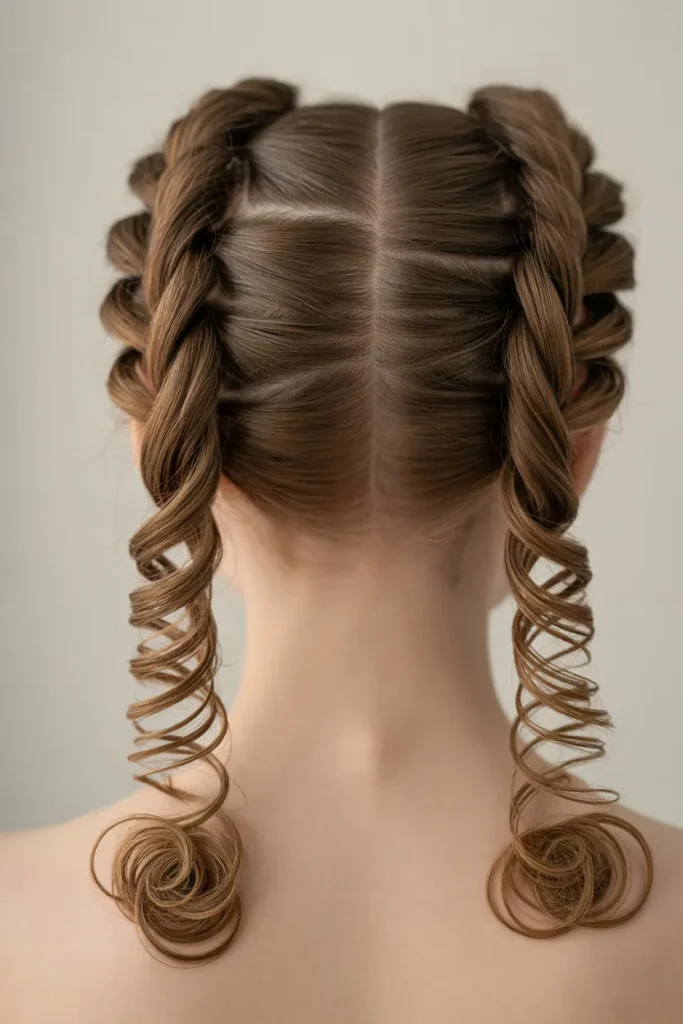
- Choose smooth extensions that maintain their curl pattern.
- Keep the transition between braids and curls carefully protected.
- Use lightweight detangling products on the curled ends.
- Avoid excessive brushing that separates or weakens the curls.
- Secure the ends loosely before sleeping in a satin bonnet.
- Ask for balanced braid thickness to reduce unnecessary weight.
French curl braids deliver an elegant combination of traditional braiding and soft, flowing curls. Their beautifully curled ends create movement that makes the hairstyle especially striking in photographs and natural daylight. The braided upper sections provide structure, while the loose lengths introduce a softer finish around the shoulders and back. To preserve this contrast, choose extensions with a consistent curl pattern and ask your stylist to secure the transition between braided and unbraided sections carefully. This detail matters because the ends receive more friction during everyday activities. A thoughtful installation helps maintain the original silhouette without requiring constant restyling.
Maintaining the curled ends is essential when you want this hairstyle to remain presentable for longer. Use your fingers to separate individual curls after washing or refreshing them, working gently from the bottom upward. Avoid applying thick styling creams because they can weigh down the spiral texture and create residue. Before sleeping, gather the lengths loosely instead of folding them tightly into a bun. A satin covering helps minimize friction while preserving the curl definition. During daytime activities, keep the ends away from rough backpack straps and textured clothing. These small adjustments can make everyday maintenance considerably easier.
Fulani Braids With Beads
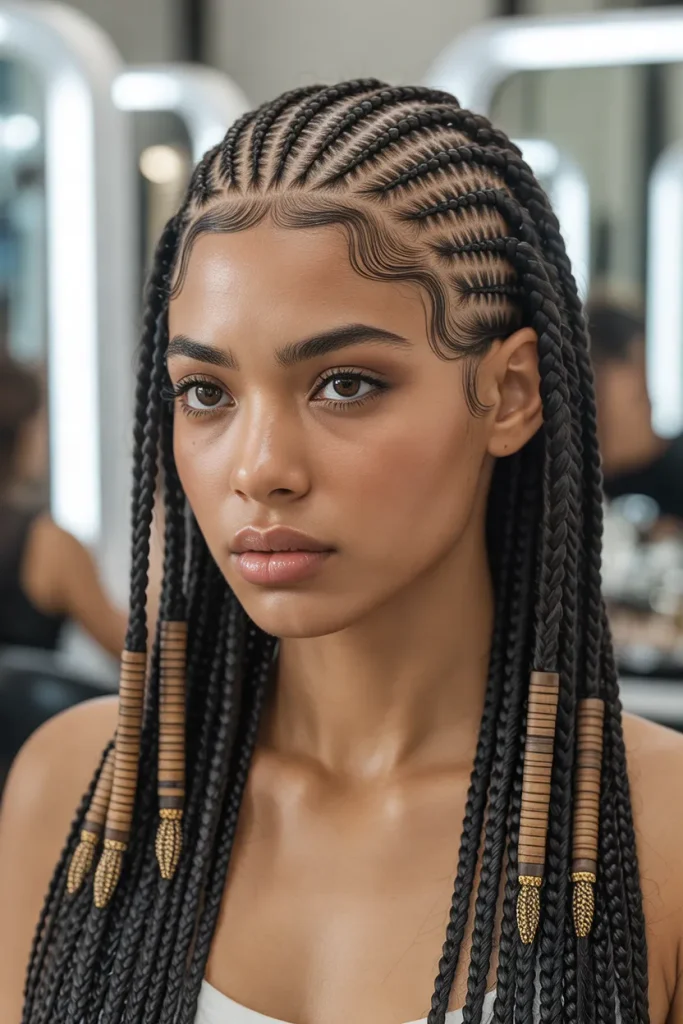
- Secure beads properly without creating excessive weight on the ends.
- Keep decorative accessories away from delicate hairline sections.
- Clean visible partings carefully to maintain the detailed pattern.
- Use a satin scarf to protect beads and braids.
- Choose lightweight accessories that will not pull individual sections.
- Refresh loose edges gently without changing the original design.
Fulani braids offer a distinctive appearance through their combination of central cornrows, individual braids, and decorative details. The traditional-inspired arrangement can feel contemporary when finished with carefully selected beads and subtle accessories. Its beauty comes from the balance between detailed scalp patterns and freely hanging sections. For a longer-lasting result, discuss the placement and weight of decorative pieces before installation. Heavy beads can place unnecessary strain on individual braids, especially near the hairline. A skilled stylist can distribute accessories evenly and create a comfortable pattern that maintains its shape while complementing your everyday wardrobe.
Decorative hairstyles benefit from a slightly more careful nighttime routine. Before bed, check that the beads are secure and that no braid is caught beneath your shoulders or clothing. Use a satin scarf to protect the roots and reduce friction around the individual sections. When refreshing the style, concentrate on visible partings rather than repeatedly applying products over every braid. A clean cotton pad or suitable scalp applicator can help you reach exposed areas more precisely. If an accessory becomes loose, have it adjusted rather than pulling the braid tighter yourself. Thoughtful handling keeps the decorative finish looking intentional.
Side-Swept Lemonade Braids
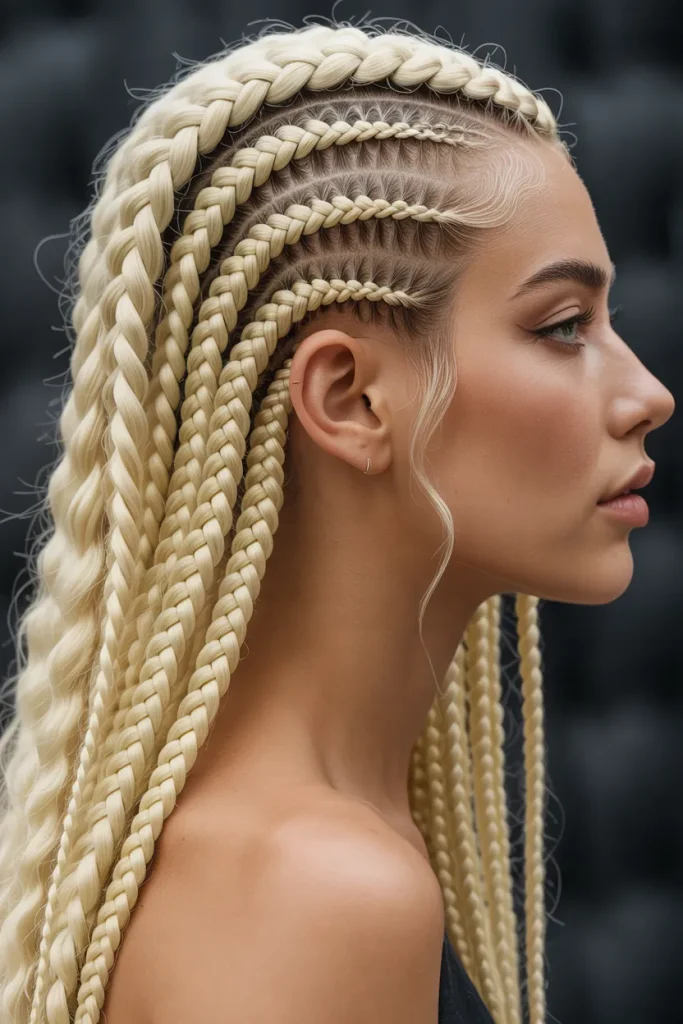
- Maintain the original diagonal direction when refreshing loose roots.
- Avoid repeatedly switching the hairstyle from one side.
- Use lightweight mousse to smooth surface flyaways.
- Protect the exposed side with a satin covering.
- Keep braid lengths moisturized without oversaturating the extensions.
- Choose a comfortable installation that allows natural head movement.
Side-swept lemonade braids create an elongated, sculpted silhouette that instantly makes a braided hairstyle feel more dramatic. Their diagonal direction brings attention toward one side of the face, creating a beautiful editorial finish. The curved rows also give the scalp pattern a more dynamic appearance than traditional straight-back cornrows. To maintain the original design, ask your stylist to establish a consistent braid direction and balanced section placement. The finished style should feel secure without pulling uncomfortably around your temples. Proper installation is particularly important because the asymmetrical arrangement naturally places more visual emphasis on the swept side.
The easiest way to preserve this hairstyle is to avoid constantly changing its direction. Repeatedly moving the braids across your head can disturb the roots and make the original pattern appear less defined. At night, position the lengths comfortably and cover the exposed scalp with a satin scarf. Use a small amount of mousse when surface frizz appears, allowing it to settle before handling the braids again. If you prefer refreshing your edges, apply product sparingly rather than creating another tight layer of styling gel. Gentle daily handling helps the diagonal silhouette remain polished without demanding complicated maintenance.
Braided Bob With Curved Ends
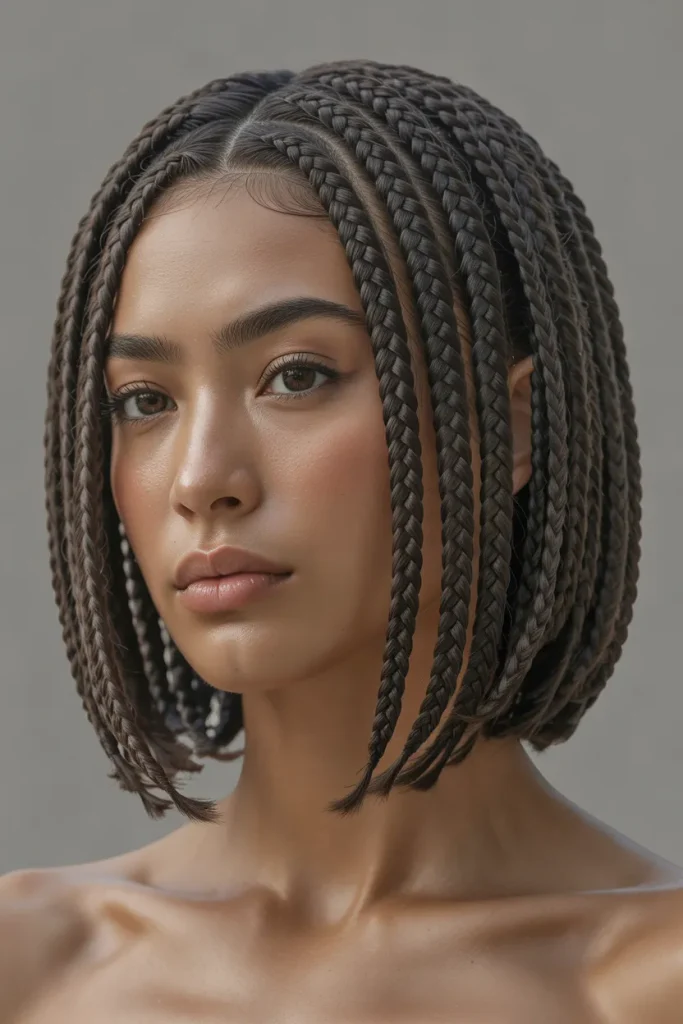
- Keep the bob length consistent for a balanced silhouette.
- Choose lightweight extensions to avoid unnecessary pressure.
- Curve the ends carefully during the initial installation.
- Use a satin bonnet wide enough for the entire shape.
- Avoid repeatedly tucking the shorter braids behind your ears.
- Refresh uneven ends instead of manipulating every individual braid.
A braided bob creates a striking alternative to traditional long protective hairstyles. Its shorter length feels modern, sophisticated, and surprisingly versatile, while the clean outline makes the entire installation look professionally finished. The curved ends introduce softness and prevent the silhouette from appearing too blunt. This shape works particularly well when braid lengths are customized to complement the jawline and cheekbones. Ask your stylist to check the overall balance from the front, sides, and back before finishing. Consistent section sizes also help the bob maintain its intended shape as the natural hair begins growing beneath the extensions.
Shorter braids are often easier to handle during everyday activities, but their ends still need protection from friction. A satin bonnet that comfortably covers the entire bob is particularly useful because shorter sections can otherwise shift while sleeping. Avoid repeatedly folding the braids behind your ears, especially when they have been arranged into a precise curved shape. If the ends become slightly uneven, ask your stylist whether a small adjustment is appropriate. For daytime styling, use a lightweight finishing mousse rather than heavy waxes. This keeps the surface neat while preserving the movement that makes the bob attractive.
Micro Knotless Braids
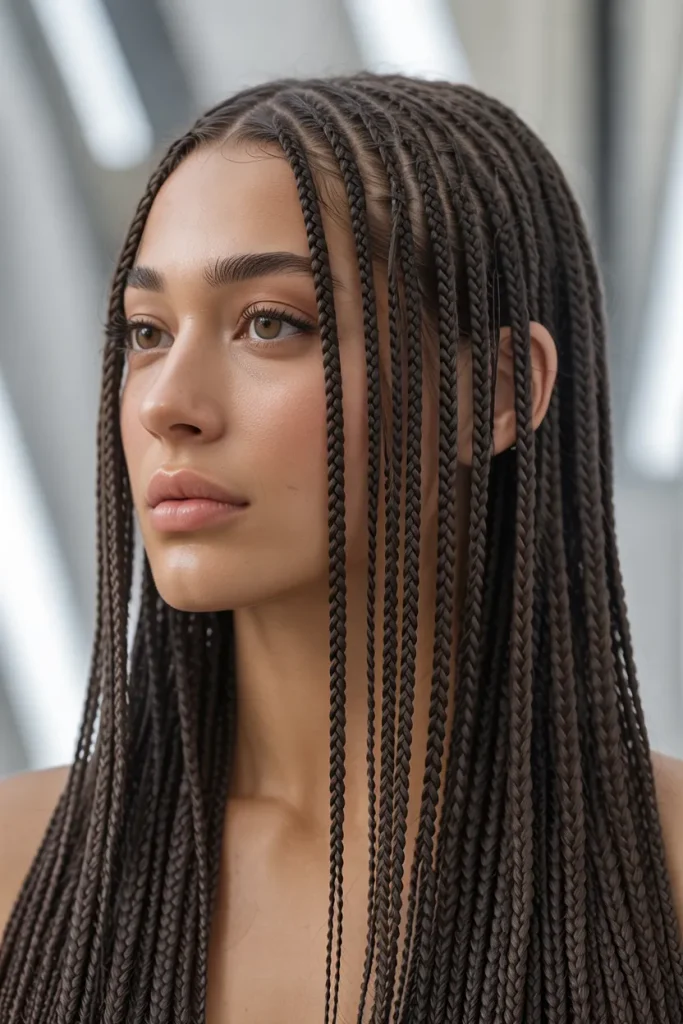
- Ask for consistent micro sections to prevent an uneven finish.
- Choose manageable lengths to reduce unnecessary extension weight.
- Use a gentle cleansing routine around the numerous partings.
- Avoid pulling micro braids into tight hairstyles every day.
- Cover the full length with a satin bonnet or scarf.
- Monitor individual sections for slipping or excessive tension.
Micro knotless braids create an intricate, delicate finish that looks especially beautiful when viewed up close. Their fine sections offer impressive styling flexibility, allowing you to experiment with ponytails, half-up looks, and elegant loose silhouettes. Because each braid is relatively small, the installation requires patience and careful sectioning. Ask your stylist to evaluate your natural hair density before selecting the final size. Extremely small braids are not automatically suitable for everyone, particularly when the natural hair is fragile. A comfortable installation with appropriately sized sections helps maintain a balanced appearance while making the finished style easier to personalize.
Although micro braids look lightweight individually, their numerous sections require thoughtful maintenance. Clean your scalp carefully using a diluted cleanser or another suitable method recommended by your stylist. Rinse thoroughly and allow the roots to dry completely before covering your hair. Avoid constantly separating the tiny braids to create different partings, as repeated manipulation can contribute to premature frizz. A satin bonnet helps keep the lengths organized overnight. If you notice individual braids slipping or becoming unusually loose, address the issue early rather than tightening them yourself. Regularly checking the condition of your natural hair also helps guide timely removal.
Ghana Braids With Curved Patterns
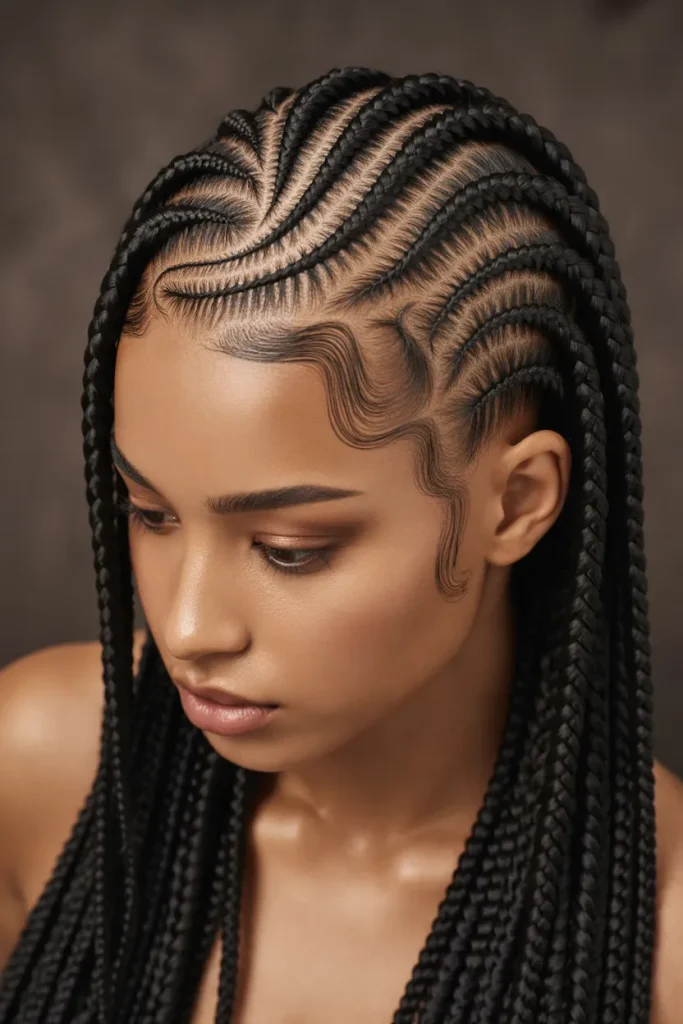
- Select a curved pattern that follows your natural head shape.
- Maintain even extension distribution throughout each raised braid.
- Keep exposed scalp areas clean and lightly moisturized.
- Avoid placing excessive tension on the curved sections.
- Use a satin covering to preserve the sculptural arrangement.
- Choose a pattern that remains attractive as roots grow.
Ghana braids are known for their dimensional appearance and beautifully structured cornrow patterns. Their gradual extension technique creates raised rows that can be arranged into sweeping curves, geometric sections, or symmetrical designs. This makes them particularly appealing when you want a protective hairstyle with a more customized finish. Before installation, discuss how the pattern will sit around your hairline and crown. A thoughtful arrangement can create an elegant silhouette without requiring excessive product or complicated accessories. Consistent extension distribution is another important detail because uneven thickness can make the finished rows appear less polished.
Maintaining curved Ghana braids requires attention to both the scalp and the raised braid structure. Use a gentle scalp cleanser when needed, applying it carefully between the rows rather than rubbing aggressively. After cleansing, allow your hair to dry fully before putting on a bonnet. Lightweight mousse can help control surface frizz, especially around the crown where friction often develops. Avoid wearing very tight headbands or repeatedly pulling the braids into high ponytails. These habits can disturb the original pattern. When new growth becomes visible, a professional assessment can help determine whether refreshing or removing the style is the better option.
Braided High Ponytail
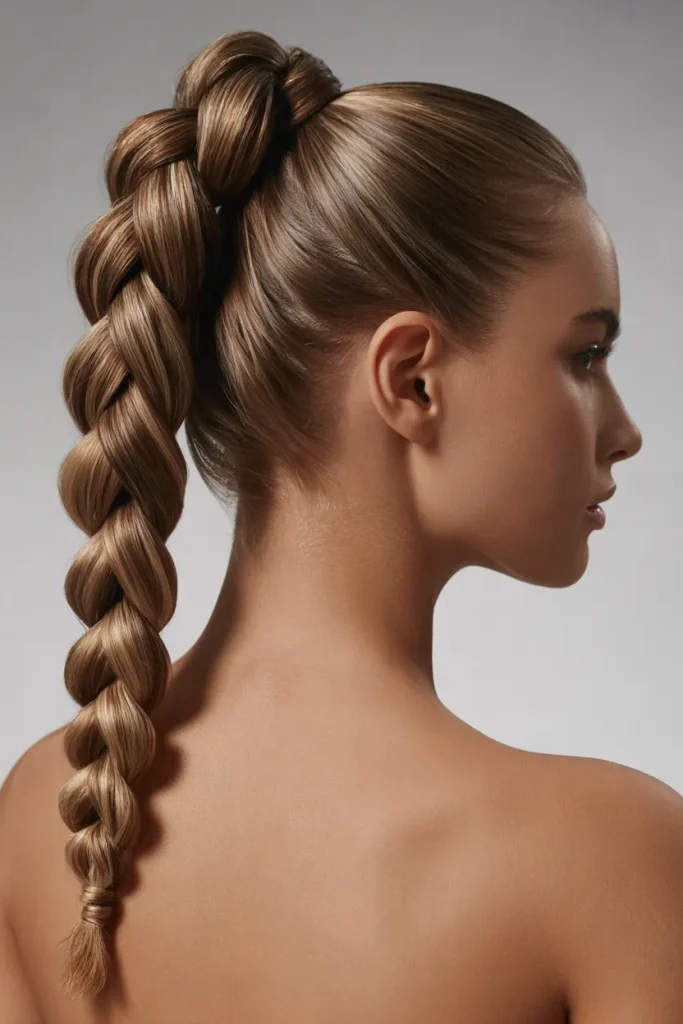
- Gather the braids without pulling tightly against the hairline.
- Use a soft hair tie designed to reduce friction.
- Wrap the ponytail base neatly with a matching braid.
- Avoid wearing the elevated style continuously throughout the week.
- Protect the ponytail lengths inside a loose satin covering.
- Alternate between loose and gathered styling to reduce tension.
A braided high ponytail transforms individual braids into a sleek statement hairstyle with beautiful height and movement. Its elevated silhouette highlights the face while allowing the braided lengths to fall dramatically down the back. The wrapped base adds a refined salon detail that makes the style look more intentional than an ordinary gathered ponytail. This design works best when the underlying braids are already neat and secure. Ask your stylist to create a smooth gathering point without excessive pulling. The goal is a lifted appearance that feels comfortable throughout the day, rather than a hairstyle that depends on uncomfortable tension.
One important maintenance detail is changing the ponytail position regularly. Keeping all your braids tightly gathered in the same place can create unnecessary stress around the hairline and crown. When you are relaxing at home, release the gathered lengths and allow the braids to fall naturally. Use a soft tie rather than a narrow elastic that catches individual sections. At bedtime, avoid sleeping with the ponytail tightly secured. A satin bonnet can protect the lengths while reducing friction. If the base starts looking untidy, carefully smooth it with lightweight mousse instead of repeatedly tightening the entire arrangement.
Halo Crown Braids
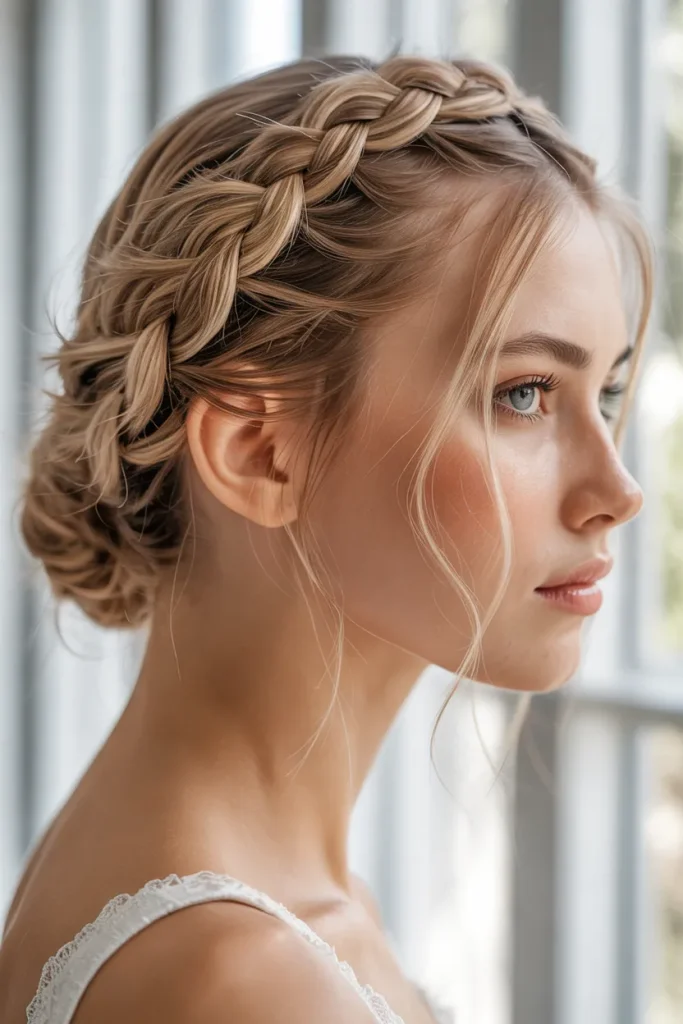
- Create an even crown shape with balanced braid thickness.
- Secure the ends discreetly without uncomfortable hidden pins.
- Choose lightweight accessories that will not disturb the structure.
- Protect the crown using a spacious satin bonnet.
- Refresh exposed edges without repeatedly rebuilding the braid.
- Keep the style comfortable around the ears and temples.
Halo crown braids create an elegant circular silhouette that feels romantic, graceful, and effortlessly polished. By wrapping the braided sections around the head, this design keeps the lengths organized while highlighting the face and neckline. It is particularly attractive for weddings, celebrations, formal dinners, and occasions when you want a refined protective hairstyle. The overall appearance depends on even section placement and a comfortable crown structure. Ask your stylist to distribute the braid weight carefully and secure the ends discreetly. A well-balanced installation should feel stable without creating pressure around the temples or behind the ears.
Preserving the circular shape requires gentle handling, particularly when putting on clothing or removing accessories. Avoid pulling sweaters, scarves, or tight collars over the crown without taking care. A satin bonnet with enough room for the entire arrangement can help prevent flattened sections during sleep. If a small area becomes loose, have it secured carefully rather than tightening the surrounding braids. Lightweight finishing mousse can smooth visible flyaways without making the crown stiff. You can also personalize the design with small decorative pins, provided they are comfortably positioned. Remove accessories before sleeping to avoid unnecessary pressure on individual braids.
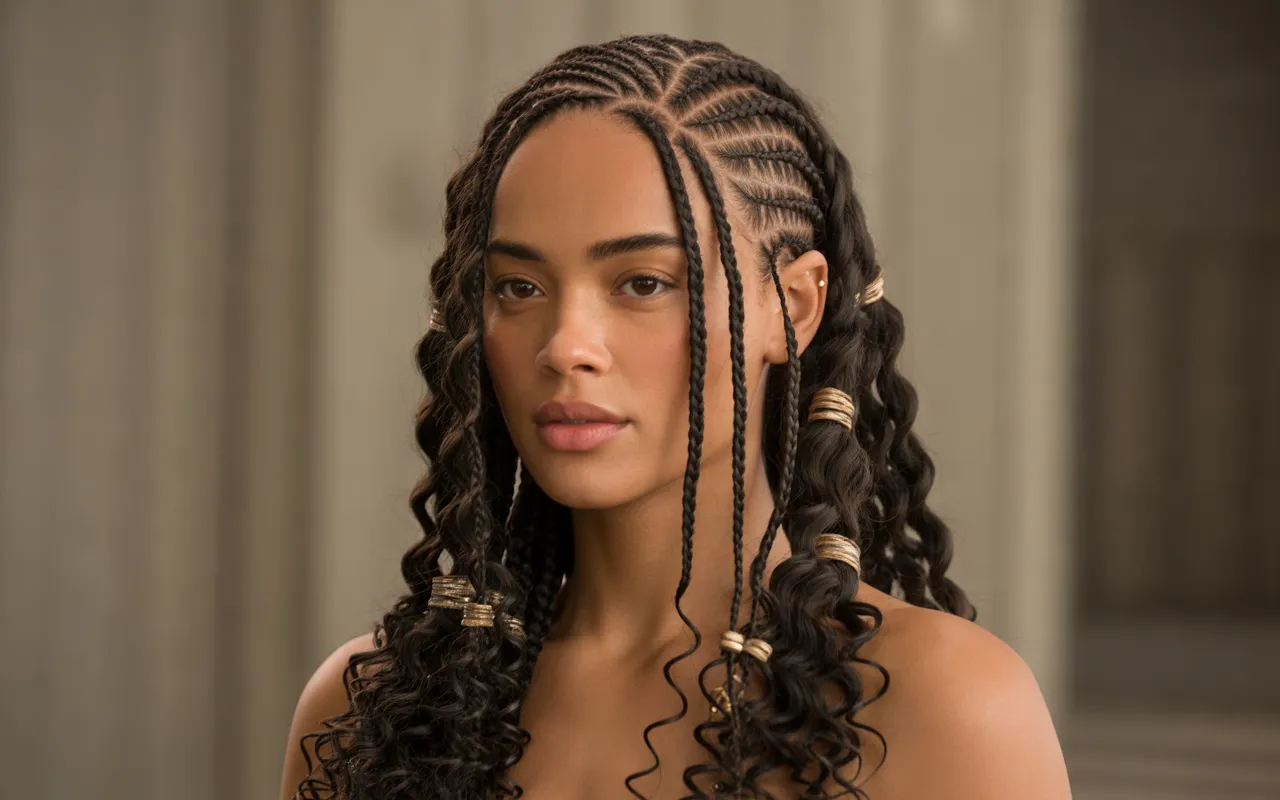
Boho Fulani Braids
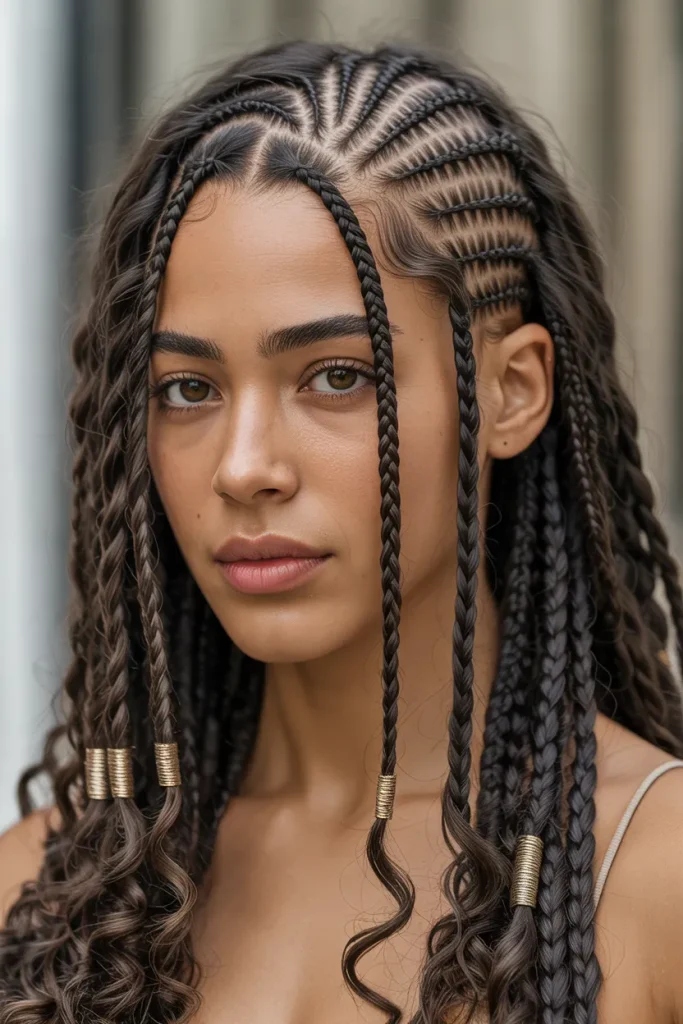
- Combine curved cornrows with individual braids for dimensional styling.
- Keep loose curls separated to prevent unnecessary tangling.
- Select lightweight cuffs that will not pull on extensions.
- Protect the curly ends with a satin bonnet.
- Refresh scalp partings without disturbing the central design.
- Use curl mousse sparingly to maintain soft movement.
Boho Fulani braids bring together intricate scalp detailing and relaxed curly sections for a hairstyle that feels both expressive and sophisticated. The central pattern creates structure, while the loose braids and curls introduce movement around the face. This combination is particularly attractive when you want something more detailed than conventional box braids without sacrificing everyday versatility. Ask your stylist to balance the decorative elements with the natural distribution of your hair. Too many heavy accessories can overwhelm the design. Carefully placed cuffs and appropriately sized curls create a more refined finish that remains attractive with simple clothing and statement outfits.
The combination of different textures means this hairstyle benefits from a targeted maintenance routine. Focus on keeping the cornrows neat while giving the loose curls enough attention to prevent tangling. Use your fingertips to separate curls gently, then apply a small amount of suitable mousse when definition needs refreshing. Avoid saturating the entire installation because the braided sections do not require the same treatment as loose hair. Before bedtime, tuck the curly pieces inside a satin bonnet and keep decorative cuffs comfortably positioned. If the curls become difficult to manage, consult your stylist about refreshing those sections without disturbing the underlying braids.
Bohemian Braided Bob
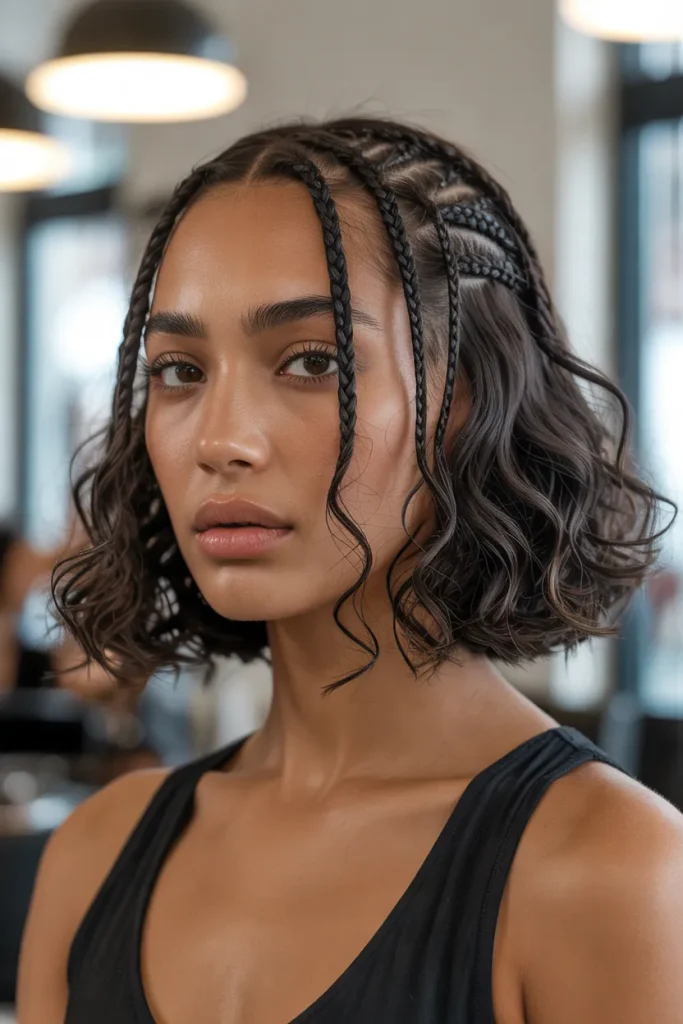
- Keep the bob length even for a recognizable silhouette.
- Distribute loose curls around the face and back.
- Protect shorter curly ends from clothing friction.
- Use a lightweight curl refresher when necessary.
- Avoid compressing the bob under tight headwear.
- Sleep with a satin bonnet that accommodates the curls.
The bohemian braided bob combines the convenience of a shorter protective style with the softness of loose curly details. Its shoulder-grazing length creates a flattering outline, while scattered tendrils prevent the overall design from looking overly structured. The shorter silhouette is especially appealing if you enjoy braided hairstyles but find very long extensions inconvenient for everyday routines. Ask your stylist to customize the length around your shoulders and choose curl placements that complement your preferred parting. A balanced arrangement makes the bob look intentional from different angles and allows the individual braids to move naturally.
Shorter bohemian styles still need careful protection because their loose ends can rub against collars, jackets, and bedding. During the day, check that curly pieces are not caught beneath shoulder straps or accessories. At night, use a satin bonnet that accommodates the entire shape without flattening the curls. When the tendrils lose definition, gently separate them with your fingers and apply a small amount of curl refresher. Avoid brushing the loose sections aggressively because this can create unnecessary frizz. If the bob starts losing its original outline, have your stylist assess the ends rather than cutting individual braids at home.
Mermaid Knotless Braids
- Select an extension length that suits your daily routine.
- Keep extra-long braid lengths organized during everyday activities.
- Use a satin scarf to protect the upper sections.
- Detangle any loose textured accents gently with your fingers.
- Avoid sitting on the braid lengths whenever possible.
- Choose balanced extension weight for comfortable everyday wear.
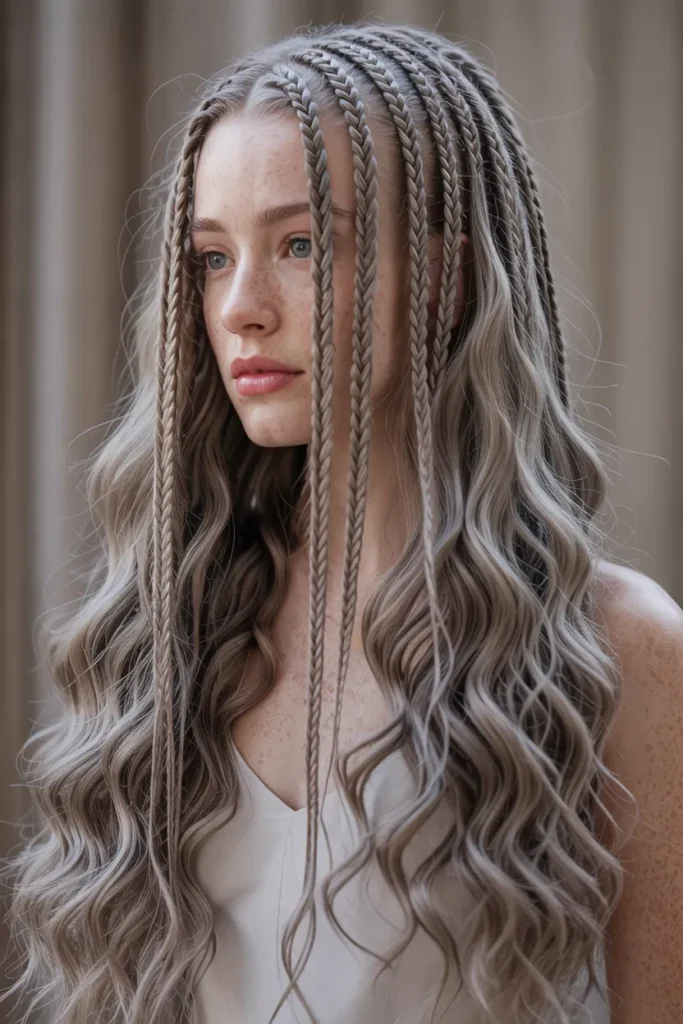
Mermaid knotless braids create a dramatic, flowing silhouette that feels glamorous without looking overly complicated. Their extra-long lengths make them especially striking in photographs, while subtle color variations can add depth and dimension. The knotless foundation keeps the roots looking natural and creates a smooth transition into the extensions. However, very long braids need thoughtful planning before installation. Discuss the overall length and extension weight with your stylist so the finished hairstyle remains comfortable. A well-proportioned design should complement your height, personal style, and everyday activities instead of becoming difficult to handle.
The length is the main consideration when maintaining this style. Extra-long braids can become tangled around chair backs, handbag straps, and clothing, so keeping them organized helps prevent unnecessary pulling. When sitting down, move the lengths forward or to one side instead of trapping them beneath your body. At night, loosely gather the braids and protect them with a satin covering. Avoid tying the entire length into a tight knot because this can create unwanted bends. If you exercise regularly, secure the braids gently using a soft scrunchie and release them afterward to reduce continuous tension.
Braided Low Bun
- Gather the braids loosely to protect the natural hairline.
- Use smooth pins that will not snag individual sections.
- Create a balanced bun without excessive twisting or pulling.
- Protect the nape area with a satin scarf.
- Alternate between a bun and loose braids regularly.
- Avoid sleeping with tightly secured pins in place.
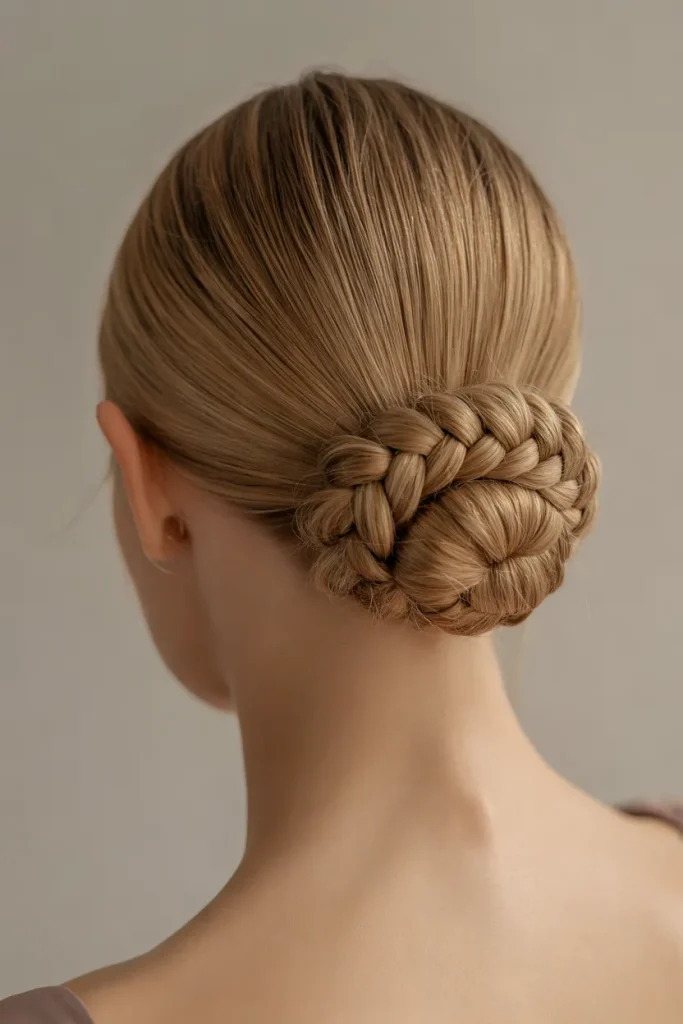
A braided low bun gives individual braids a sophisticated finish that feels equally appropriate for professional settings and special occasions. Positioned near the nape, the bun creates a graceful silhouette without the dramatic height of an elevated ponytail. Its beauty comes from arranging the existing braids into a smooth, dimensional shape rather than adding complicated accessories. Ask your stylist to demonstrate a comfortable gathering technique that does not pull against your edges. You can personalize the bun with a few carefully placed pins or leave it completely minimal. Either approach creates an elegant hairstyle that makes long braids easier to manage.
For everyday maintenance, avoid keeping the bun secured continuously. Releasing your braids regularly allows the roots to rest from the tension created by gathering and pinning. When recreating the style, use smooth, snag-free pins and position them carefully between braid sections. Do not force pins through tightly packed braids because this can damage the extensions or disturb the arrangement. A satin scarf can protect the nape and reduce friction while sleeping, but remove all pins first. If your bun becomes loose during the day, reposition the existing sections gently rather than pulling the entire hairstyle tighter.
Conclusion
Keeping your braids beautiful doesn’t have to feel like another complicated beauty routine. With the right hairstyle, gentle handling, nighttime protection, and consistent maintenance, you can enjoy a fresher, more polished look for longer. Learning how to make your braids last longer is really about building simple habits that protect your natural hair while preserving your favorite braided style. From elegant knotless braids to creative Fulani patterns and chic braided bobs, there are plenty of gorgeous looks worth trying. Save your favorite ideas on Pinterest, experiment with a style that matches your personality, and share this guide with someone who loves braids. Your next beautiful braided look starts with a little extra care!